Showing posts with label branding. Show all posts

Tuesday, December 03, 2013

Motrin IB - lesson learned from innovation blunders

-->
Here’s a great story with lessons learned from innovation blunders.

It’s an excerpt from Why (Smart Companies) Do Dumb Things by Calvin L. Hodock 

In this series of case studies, Hodock shares insight on avoiding 8 common mistakes in new product development.

Johnson and Johnson still needed an ibuprofen brand in its product portfolio, and it obtained it by swapping brands with Upjohn.  Motrin IB acquired in the swap, became a companion brand to Tylenol. The brand was so reasonable successful, riding the coattails of Advil, which had established the ibuprofen beachhead. Upjohn did not want to continue playing the expressive, high-stakes marketing game, which was absolutely essential in order to survive the competitive over-the-counter pain reliever market.

Motrin IB was viewed as a potentially strong global brand within Johnson and Johnson, but there remained the same issue that confronted Medipren—how to position Mortin IB in a way that protected Tylenol’s flanks.  The company understandably wanted to keep the milk flowing from the cash cow. This time Johnson and Johnson did some very good homework.

A segmentation study of the pain relief market revealed a segment of women who medicated aggressively. Very importantly, Tylenol was not heavily represented in the segment. This became Motrin IB’s target segment, and its initial “kick butt” advertising campaign worked brilliantly with these aggressive mediators while minimizing Tylenol cannibalization. It is possible to “have your cake and eat it too” with smart positioning.

Score another one for David Ogilvy. Positioning is one of marketing’s most important decisions. It is always out there in the marketplace, ready to perform miracles.

Tuesday, August 13, 2013

2012 supplement of Standard Highway Signs: branding guidelines for the road


On a recent road trip, I observed that all highway signs are the same design, font, colors, etc. 

As a branding guy, I asked: Who makes them? Where are graphic standards?

So I researched to find the Federal Highway Administration has developed the design details of the new signs added in a book called "MUTCD" (Manual on Uniform Traffic Control Devices).

The signs are published in a special section of Standard Highway Signs.

The contents of the 2012 Supplement incorporate new additions of signs and markings, with details for all signs and pavement markings, expanded sign design guidelines, and details for symbolic traffic and lane-control signal indications.

It's everything you'd expect in a combination of a brand standards guide and a government publication.

Click on the link to check it out at http://mutcd.fhwa.dot.gov


Monday, July 29, 2013

"20 Logos We Love" from Entrepreneur magazine

Thousands of logos compete for our attention every day. 

Clearly we care about logos. But what makes a great logo?  And how can you make one that not only stands out, but also cultivates a loyal following?

In a recent issue of ENTREPRENEUR magazine, designer Andrew Shea, published some great examples.

Experts note, he says, there are at least three necessary traits: 
  1. distinct from other logos (especially those of competitors), 
  2. instantly recognizable (imagine it on a neon sign in Times Square), and 
  3. legible at all sizes (from billboards to mobile devices). 

That said, there are many ineffective logos that follow these rules. What sets the great ones apart is that they help audiences connect with the organization's mission or personality in a meaningful way.

See the slide show of the 20 favorites at www.entrepreneur.com/slideshow

Thursday, July 18, 2013

Seeing the same brand hallmarks in new ways: Lessons for N-of-8 from James Bond

When using the N-of-8 process, it’s important to remember that you’re not just writing a story – you’re developing a BRAND story.

So the core brand hallmarks must be presented and maintained consistently. But that doesn’t mean the story can’t be told in many different ways.

 
Consider the series of James Bond movies. Even across all the installments, there are elements that make a 007 Story:
  • British
  • Spies
  • Music
  • Bond girl
  • Shaken-martini
  • Villain
  • World domination
  • Opening
  • Gadgets-M
  • Cars
  • Gambling
  • Gun-eye
  • Branding (despite star changing)
  • Exotic locations
  • Big names
  • Q
  • Cool
  • Sophistication
  • Clothes
  • Near death
With these central and fundamental ingredients, many stories can be crafted with their own unique locations, characters, plots, dangers, and fantasies.
Far from limiting your creative potential, defining the brand hallmarks gives a structure to which you can then build endless story possibilities.

The same principles can be seen when analyzing other popular movies series, like Star Wars, Indiana Jones, Pink Panther, and Rocky. That’s why I often use these as a warm-up exercise with our creative teams before we start writing stories for N-of-8 groups. It helps us find parallels, archetypes, villains, conflicts, and climaxes. We recall the look of the titles and credits. We even sing the theme song or hum the main chorus.

As you begin crafting your brand’s story, put together a list of the escapades you’ll experience.

Tuesday, April 02, 2013

Global Branding vs. Local Customization

How do you weigh the benefits of a unified global campaign compared to the desire for local market customization?


Thursday, March 28, 2013

N-of-8 methods combined with ForwardFast brand model


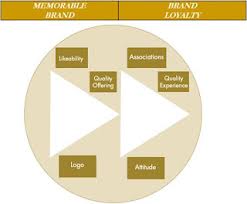
When N-of-8 methods are combined with our ForwardFast® branding model, you can look at six main areas of the brand to determine the rebranding improvements:

1. Likeability – what elements of the product and branding are attracting customers?
2. Logo – is the name, symbol, font, design appealing – and can it be sustained in an extended life cycle?
3. Quality Offering – are the main attributes of the brand simple and easy to understand?
4. Associations – what is the brand connected with, and if it’s right, could it be strengthened?
5. Attitude – consider the tone of the package design, campaign copy, delivery system.
6. Quality Experience – this is the newest and strongest area that many marketers are learning needs attention; does the experience of buying, using, and servicing the product match your brand – and can it be elevated?

Friday, December 28, 2012

9 key notes from "Practically Radical"

Here is a synopsis of my notes from reading "Practically Radical" by William Taylor:


Age of disruption

“You can’t do big things if you are content with doing things a little better than others.”


Brand attic

Timelines of products, campaigns, artifacts

Pedigree = Dogma “we’re for dogs”

Girl Scouts = Juliette, founder 1912


Where you look shapes what you see

- Build-A -Bear

- Pepsico

- Container store


“Zero-Gravity Thinkers”

The job of change agent is not just to surface high-minded ideas. It is to summon a sense of urgency inside and outside of organization, then turn urgency into action.


“Crumple it up”

Humana identified practices to stop

“Chief Purposologist”


Be the most of something

You can be unique and not narrow


Thinking harder – caring more

Engage emotionally to satisfy


Blank-sheet-of-paper mindset


Someone who can tap people and processes in org

Tuesday, October 09, 2012

2 masterminds in "Creative Engines" share insights on innovation


Monday night, I had the chance to see and hear two creative masterminds in conversation focusing on innovation and creativity.

  • Sergio Marchionne is chairman and CEO of Chrysler Group LLC and CEO of Fiat S.p.A.  Marchionne is credited with turning Chrysler Group and Fiat around.
  • John Jay, a Columbus native and Ohio State alum, is co-global creative director for advertising agency Wieden+Kennedy, the agency that developed the “Imported from Detroit” Super Bowl ad campaigns for Chrysler that made a worldwide splash.

In this event, Marchionne and Jay met each other personally for the first time – then discussed topics that included the powerful impact of innovative design and bold creative practice on successful businesses and, by extension, the American economy, as well as the complex and challenging process of reshaping a brand, and more.

Here are a few highlights from my personal notes:

“Talk is cheap, except in a 2-minute commercial during halftime of the Super Bowl.”

“We used a composer in Portland for the music track; now she’s a punk artist.”

“Clint first said he’d do the commercial but didn’t want to show any cars.  I told him I sold cars for a living.”

“In 2009, no one bet a dollar on our survival.”

“I challenged our organization to launch 16 new products, that now account for 75% of our sales.  We’ve paid back the government loans, with interest, 6 years ahead of schedule.”

“We tapped into the mindset of the country.  If Chrysler could do it, so could I.”

“Our leadership model requires two things:  lead change and lead people.”

From Eminem song, Lose Yourself:

Look, if you had one shot, one opportunity
To seize everything you ever wanted
One moment
Would you capture it or just let it slip?


Marchionne joined Fiat in 2004, returning it to profitability in 2005 after four straight years of losses, and spearheaded Fiat’s strategic alliance with Chrysler in 2009 with the support of U.S. and Canadian government and trade unions. A little over two years later, following its emergence from Chapter 11, Chrysler Group returned to profitability; in June of this year, sales were up 20 percent from the previous year.

This event is presented in conjunction with the 200Columbus bicentennial celebrations, honoring the creative spirit of Columbus. It is also the final event in the eight-day idUS international design festival, taking place in Columbus in October.

In conjunction with the event, 3 cars were parked in front of the Wexner Center Plaza:   the Chrysler 200S Convertible, the Dodge Dart Limited, and the Fiat 500.

Tuesday, July 24, 2012

7 reasons patients choose Mayo Clinic: a case in ePatient branding

 
The power of word-of-mouth marketing is getting stronger than ever.

Watch this video explaining the top reasons patients choose Mayo Clinic.

And you'll appreciate it even more when you hear that the total cost of Mayo Clinic e-marketing was $0.  It's been about three years since Mayo created its "social media pyramid (ie, right number of servings per day).

Consider the impact for the brand then and how it's getting results now -- and for the future.

Monday, July 23, 2012

6 steps of ForwardFast model: listen to feature on Sky Radio

It was 4 years ago this week that I was interviewed by the Sky Radio Network for an in-flight audio  segment for broadcast on US Airways.

Dennis Michael of Sky Radio showcased ForwardFast, my first book (and one of the first books of its kind), which presents the principles of brand innovation for health, science, and technology products.

If you’re driven to accelerate the adoption of new medical treatments, then this book will show you how to move with urgency to learn fast. track fast, think fast, respond fast, and create fast, then ForwardFast will help you become more creatively prepared and focused to reach the scientists, medical researchers, physicians, nurses, clinics, and the millions of patients who use your brands.

Other topics covered include:
• putting brand innovation to work with the 6 steps of the ForwardFast model;
• defining both a quality offering and a quality experience; and
• understanding what positive brand associations you can create

You can listen to the full interview here:

Wednesday, January 25, 2012

8 branding worksheets - available on this site for limited time

I'm soon going to be updating my book website, Forward-Fast.com

So, I want to remind you of the brand workshop tools you can download now for free.

Click to view the list of exercise-templates-for-branding


Friday, November 18, 2011

3 years retrospective: 3 points from my interview on Fox Business

Three years ago this week, I was interviewed on Fox Business News.  Looking back, some things have changed (the prices of stocks and gas have gone down), but many things have not.


Some key points from my interview:

1. It's important not abandon your brand in this economy. Those companies who keep spending money on their brand will survive.

2. To get results remember to stay customer focused. Think about what the customer wants to hear and you will be more successful in the long run.

3. Make quality improvements to core products, invest in R&D, and attribute an experience with your product.

Overall, don’t hit the “stop” button. Instead find the opportunity to go forward…fast.


Watch it again on our YouTube/StinsonBrand channel.

Friday, July 23, 2010

So long old ‘bou

In today’s blog, Brandy Gonsoulin writes about her experience earlier this spring: “As a Caribou coffee drinker, I received a shock (not of the caffeine kind) on a mid-afternoon coffee trip.  In the middle of a conversation, with a closer look at the cup, I realized that the logo had been redesigned."

Here are her observations on the rebranding initiative at Caribou Coffee.

I looked at the door – indeed, there was a new, odd inspired caribou taking the place of my familiar leaping reindeer, going the opposite direction have you.  I was confused, even mildly starting to feel a twang of brand grief.  The rebranding had snuck up on me without a warning.  What happened to the logo I loved?  Where were the big announcements, the “Coming Soon,” the “Look out for our new Image” campaigns?  Was this a joke?  Would CB2-inspired furniture soon replace the wood campfire-inspired interior?

The rebranding was an effort by the new CEO Mike Tattersfield to change what was referred to as a “schizophrenic brand image.” The color palette and font were exchanged for a sleeker look and the caribou is even leaping to the right to symbolize forward growth.

I get it.  I understand the need to refresh, to revisit strategy and to create a new image. And when I’m on the consulting side I might look at the left logo and recommend it is time to clean out the closet and get rid of that 1980s trench coat.  But being on the consumer’s side, it’s a different story.  And it got me thinking - if making a brand is all about brand loyalty then re-branding without an emerging strategy is like breaking up.  Caribou coffee didn’t slowly stop seeing me and limit calls to once a week.  They sent me a text message saying it’s just not working.

As marketers if you are considering changing what people have known and loved about you for so long in your attempt to capture a new audience, are you also considering your current audience and how the re-branding can turn them away?  As part of the re-branding communication strategy, how are you addressing your current audience loyalties and building support for the new image?

Who knows. . .maybe the new one will grow on me.  But for now, so long old ‘bou.

Tuesday, November 24, 2009

5 B-to-B Brand Ads – and 4 Stinson Brands Ads – That Point in the Right Direction (To The Web)


Blog entry submitted by Nancy Burgess, one of our Verbal Brand CHEMists.

When we use our C.H.E.M. tool to create ads for our clients, we not only Connect with our audience, provide Honest information, and make content Easy to follow, but we also ensure that we Motivate our targets to take action.

In today’s environment, a clear call to action drives customers and potential customers to a website. Unique URLs for each ad can help track the promotional efforts and be a measure of ROI.

In a recent issue of B-to-B Magazine, five campaigns were reviewed specifically on their ability to drive visits to the web site:
  • Energy concern Petrobras had only a scant reference to its Web site, as a standalone element in the bottom left-hand corner of the ad.
  • Deutsche Bank gives readers no incentive to visit its web site.
  • Sun Microsystems and technology services provider Computer Sciences Corp. offer to help companies with their identity and access management programs – with a reason to visit the web to “watch a compelling video on the importance of identity management. ...” Now that's more like it.  (There's one big problem: the URL is 50 characters long.)
  • Adobe Systems offers a URL better look at its product in action and a free trial of the system.
  • IBM Corp’s ad “Leaner. Meaner. Greener” ends on an effective note inviting readers to see a webcast.  The landing page has a talking owl that picks up where the ad leaves off. That's the kind of print/Web synergy that more advertisers need.
Click here to read more about these brand campaigns.

As we at Stinson Brand Innovation are creating campaigns, we also want to point readers in right direction – to the web.
  • Fujirebio Diagnostics is building web traffic from European physicians through an ad we developed for Italian medical journals. The unique URL helps track ROI by associating the specific URL directly to the ad placement.
  • Vivaglobin® ads in a consumer journal urge patients to consult with their doctors about therapy and also encourage them to visit our branded website for more information.
  • Privigen® has an attention-grabbing, die-cut physician ad – a rarity in medical journals, driving physicians and pharmacists to the branded website.
Click here to see more of Stinson’s brand work.

Monday, September 14, 2009

Seeing the same brand hallmarks in new ways: Lessons for N-of-8 from “Indiana Jones”

When using the N-of-8 process, it’s important to remember that you’re not just writing a story – you’re developing a BRAND story.

So the core brand hallmarks must be presented and maintained consistently. But that doesn’t mean the story can’t be told in many different ways.

Consider the series of Indiana Jones movies. The respected, intellectual professor pulls off his bow tie and glasses to search for treasure. Even across four installments, there are elements that make an “Indiana Jones” story:
  • Jaunts to exotic destinations
  • Dodging booby traps
  • Fighting hand-to-hand with the bad guys
  • Unearthing ancient ruins
  • Hacking through jungles
  • Taking unusual transportation
  • Dining on spectacular, even bizarre meals
  • Snakes!
And there are the hallmarks of Indiana Jones’ personal brand: hat, whip, watch, journal, unshaven beard, even the influences of his father.

With these central and fundamental ingredients, many stories can be crafted with their own unique locations, characters, plots, dangers, and fantasies.

It can be extended from Raiders of the Lost Ark to Temple of Doom, The Last Crusade, and 20 years later, Kingdom of the Crystal Skull. What’s more, it can provide the story platform of media extensions into TV series, pinball and video games, and an amusement park ride.

Far from limiting your creative potential, defining the brand hallmarks gives a structure to which you can then build endless story possibilities.

The same principles can be seen when analyzing other popular movies series, like Star Wars, James Bond, Pink Panther, and Rocky. That’s why I often use these as a warm-up exercise with our creative teams before we start writing stories for N-of-8 groups. It helps us find parallels, archetypes, villains, conflicts, and climaxes. We recall the look of the titles and credits. We even sing the theme song or hum the main chorus.

As you begin crafting your brand’s story, put together a list of the escapades you’ll experience – plunging into a pit of snakes, cruising around on elephants, hitching a ride of a zeppelin, or searching for the Holy Grail.

Tuesday, August 18, 2009

Co-creation in health brands?

There is certainly a macro trend-shift from Experience Economy (here is the experience we're creating for you) to Participation Economy (here is the space in which you can participate to create your experience.)


It's happening everywhere on the web, and it's also creeping into actual customer experiences (i.e. Linux, Lego Factory, Apple retail stores, self-service hotels). Yet there's an interesting challenge when it comes to health, science, and technology brands.

I was inspired by a post on http://brand.blogs.com and have been thinking about the concept of co-creation as it relates to our categories.

I'd be interested in your ideas on how to bring co-creation to life within a medical, pharma, biotech, or diagnostic brand setting.

Thoughts?

Thursday, June 04, 2009

New Ideas for Growth

I love walking into my office and hearing the conversation of brainstorming employees. It means ideas and energy are flowing and innovation is at work. That’s why I really liked this story I came across in BusinessWeek.

Last year, Best Buy picked four groups of salespeople in their early 20s and 30s and asked the strangers to room together for 10 weeks in an L.A. apartment complex. They were to come up with business ideas that Best Buy could roll out quickly and cheaply. The result: A service called Best Buy Studio, which provides Web-design consulting for small businesses.

It’s the Real World of business-extreme brainstorming. As participant Jermey Sevush says, “Living together and knowing we only had 10 weeks sped up our team-building process. We voluntarily worked longer hours, talking about business models while making spaghetti.”

Other companies have caught on. Whirlpool sends eight sales reps to Benton Harbor, Michigan, to test out products in a program called Real Whirled. The more experience each rep has with the products, the better marketers they become.

I wonder -- how could this idea be applied to Pharma branding and connecting with the patient and their experiences?

Tuesday, May 26, 2009

2 animals at Zoo Boise “branded” in naming contest

On Sunday, we took grandson Marshall to the zoo in Boise. All the animals were great, but especially two of the animal "kids" who were recently named.
  • The red panda cub now was named Syringa, the winning name in a contest sponsored by Zoo Boise and radio station Mix 106. The name represents the Idaho State Flower. Syringa is one of only twelve surviving cubs born in the United States in 2008. A live feed of the red panda den is also available here. The red panda camera is courtesy of Serenity Retreat, Fiberpipe, iBeam Cameras and Darlene Gould. As part of the red panda Species Survival Program, the cub is scheduled to move to the Erie Zoo in Erie, PA.
  • The young Grevy’s zebra has been given the name of Hope by students from Adams Elementary School. Hope is currently being introduced to the zoo’s other Grevy’s zebra, Wyatt. After their introduction is complete, the zebras will slowly be introduced to the giraffes, creating one large, multi-species exhibit.
Located in beautiful Julia Davis Park, in the heart of Downtown Boise, Zoo Boise is one of the most popular attractions in Southern Idaho – as well as a living science facility that is home to over 201 animals from 83 various species. Zoo Boise is a community treasure where nearly 300,000 annual visitors of all ages (like Marshall and us) can learn about our natural world and the importance of protecting and preserving it for generations to come.


Thursday, May 21, 2009

3 Ways We’re Making Sure “Small Is the New Big”

Big companies used to win out over small ones because of their experience, impressive client lists, and seeming permanence. Clients trusted big agencies because they were big, but the economic crisis has changed that. Small firms like STINSON Brand Innovation are now winning the confidence and the business of recession customers.

No matter the size of our company, we’re constantly working to earn and restore customer trust by doing what small consultancies do well:
  1. Be available. Customers of small companies don't need to holler "agent" into a phone to talk to a real person. Make it easy for customers to find you and react quickly to requests and demands.
  2. Keep your promises. It goes without saying, but always follow through on what you say you're going to do.
  3. Grow sustainably. Consumer confidence is shaken and customers want to know that businesses are going to be around no matter what the economic situation. Assure customers you are acting in a financially responsible and sustainable way.

Wednesday, May 20, 2009

ZLB Plasma Re-Brands Its Name to CSL Plasma

ZLB Plasma has changed its name to CSL Plasma to align more closely with its parent company, CSL Limited. CSL Plasma is one of the world's largest collectors of human plasma for use in manufacturing life-saving biotherapies.

Headquartered in Boca Raton, FL, CSL Plasma operates collection centers throughout the United States and in Germany. It also operates state-of-the-art testing laboratories in Knoxville, TN and Goettingen, Germany, and logistics centers in Indianapolis, IN and Schwalmstadt, Germany.

Employees of CSL Plasma adhere to the highest standards of quality and safety in collecting plasma because peoples' lives depend on it. The plasma collected by CSL Plasma enables tens of thousands of people who use plasma-derived biotherapies to live normal, healthy lives.

Plasma is the essential ingredient in manufacturing products crucial to treating a variety of life-threatening medical conditions. Plasma donors must be 18 years of age or older, weigh at least 110 pounds, be in good health and meet proper identification and residency requirements. To learn more about donating plasma or to locate a center, visit www.cslplasma.com.


CSL Plasma is a division of CSL Behring, a plasma protein biotherapies company, headquartered in King of Prussia, PA. CSL Behring is committed to saving lives and improving the quality of life for people with rare and serious diseases worldwide. The company traces its corporate roots to the founding of Behringwerke, established in 1904 by Emil von Behring, the first recipient of the Nobel Prize for Medicine and Physiology.

CSL Behring manufactures and markets biotherapies indicated for the treatment of coagulation or bleeding disorders, such as hemophilia and von Willebrand disease; immune deficiencies; and Alpha1 deficiency. Biotherapies are also used to treat clotting during cardiac surgery, cytomegalovirus (CMV) following organ transplantation and hemolytic disease in newborns. Additionally, biotherapies are used in critical care settings to promote wound healing and to treat shock, burns and sepsis.

CSL is focused on innovation through new product development, market development and life-cycle management of plasma-derived or recombinant products, vaccines, and biopharmaceuticals. CSL currently employs more than 10,000 employees in 27 countries.

For more information, visit www.cslplasma.com