Showing posts with label N-of-8. Show all posts

Thursday, August 08, 2013

3 types of collaboration with customers as "co-researchers"


There will always be a gap between what a consumer is sharing and how a researcher understands it, according to authors of a recent article in Quirk’s Marketing Research Review.

This disparity is created by a gap in culture, generation or objective knowledge.

These different gaps make it difficult for a researcher to put things in the right perspective.

But consumers can help us out.

By becoming our co-researchers, they complement the researcher’s tasks and help to find more and new insights that would otherwise not have been captured. Customers feel empowered and honored when they are asked to become co-researchers. There are many ways to collaborate with co-researchers throughout the research process, from moderation until reporting.

In this article, the experience of research firm InSites Consulting using co-researchers is illustrated in three case studies from Campbell’s, Air France and KLM, and Philips.

Here is a summary to 3 types of collaboration:


Thursday, August 01, 2013

8 words to inspire more SHOW in your brand story

Here is one of the most important concepts I promote in N-of-8 story development:  the difference between SHOW and TELL.

A complete brand story SHOWS a customer how, not just TELLS them what.

Look for ways you can add more persuasion in your story.


Thursday, July 18, 2013

Seeing the same brand hallmarks in new ways: Lessons for N-of-8 from James Bond

When using the N-of-8 process, it’s important to remember that you’re not just writing a story – you’re developing a BRAND story.

So the core brand hallmarks must be presented and maintained consistently. But that doesn’t mean the story can’t be told in many different ways.

 
Consider the series of James Bond movies. Even across all the installments, there are elements that make a 007 Story:
  • British
  • Spies
  • Music
  • Bond girl
  • Shaken-martini
  • Villain
  • World domination
  • Opening
  • Gadgets-M
  • Cars
  • Gambling
  • Gun-eye
  • Branding (despite star changing)
  • Exotic locations
  • Big names
  • Q
  • Cool
  • Sophistication
  • Clothes
  • Near death
With these central and fundamental ingredients, many stories can be crafted with their own unique locations, characters, plots, dangers, and fantasies.
Far from limiting your creative potential, defining the brand hallmarks gives a structure to which you can then build endless story possibilities.

The same principles can be seen when analyzing other popular movies series, like Star Wars, Indiana Jones, Pink Panther, and Rocky. That’s why I often use these as a warm-up exercise with our creative teams before we start writing stories for N-of-8 groups. It helps us find parallels, archetypes, villains, conflicts, and climaxes. We recall the look of the titles and credits. We even sing the theme song or hum the main chorus.

As you begin crafting your brand’s story, put together a list of the escapades you’ll experience.

Monday, July 08, 2013

Obama relied on a technique like N-of-8

I enjoyed re-reading the TIME Person of the Year issue recently.  And in doing so, uncovered another case study for our N-of-8 customer interaction tool.

"In early 2011, David Simas, a former registrar of deeds in Taunton, Mass., who had become a senior White House aide, switched on what might be called one of the largest listening posts in U.S. history. 

"For months on end, two or three nights a week, Simas and his team secretly gathered voters in rented rooms across the swing states, eight at a time [emphasis added]...poked at their guinea pigs’ animal spirits, asked for confessions and played word-association games. 

"Live feeds of the focus groups were shown on computer screens at campaign headquarters in Chicago."

Wednesday, May 08, 2013

8 eBooks I want to Write ASAP


Content.

Creative energy.

Cultivation of relationships.

I don’t simple write books and blogs to educate. Rather it helps me gain (and share) a deeper understanding of subjects.

Here are some ideas I’m working on with deeper value.
  • 8 Best Practices for Brand Story Development
  • 8-Point Check List for Evaluating Brand Innovation Concepts
  • 8 Ways to Introduce New Hires to Your Industry
  • 8 Common Questions about Focus Groups Answered
  • 8 Mistakes to Avoid When Writing a Research Report
  • 88 Health & Medical Statistics For Better Decision-Making
  • 8 Experts Share Industry Insights: Learn From The Best
  • 8 eBooks to Write Right Now
Could you contribute to any of these? Let’s collaborate.

What other types of eBooks do you like? Share your suggestions.

Thursday, April 18, 2013

N-of-8 groups: elements of an impactful meeting

I really enjoyed working with Cindy B over the years to create impactful N-of-8 groups.

Here's some notes from the archives as we thought about the elements of one meeting.


Monday, April 08, 2013

N-of-8 success stories with KOLs


In many of my N-of-8 blog posts, I’ve shared success stories from working with Key Opinion Leaders a variety of markets. 

What they all have in common is a way to get the most from thought-leader interactions with a structured approach like N-of-8.
  • Opinions can be applied to a change in practices.   
  • Thoughtful questions can open up productive exchange.  
  • Planned agendas should go beyond one-way presentations to gain meaningful insights and advice.   
Most of all, facilitated sessions with relevant exercises can move participants to want to stay active and work together to create something new and different.

Thursday, April 04, 2013

Advantage of teamwork in brand innovation

on Team Play

"Individuals play the game, but teams beat the odds." 
-SEAL Team Saying

Thursday, March 28, 2013

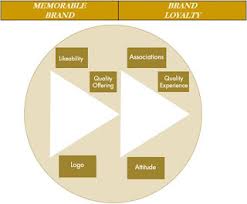
N-of-8 methods combined with ForwardFast brand model


When N-of-8 methods are combined with our ForwardFast® branding model, you can look at six main areas of the brand to determine the rebranding improvements:

1. Likeability – what elements of the product and branding are attracting customers?
2. Logo – is the name, symbol, font, design appealing – and can it be sustained in an extended life cycle?
3. Quality Offering – are the main attributes of the brand simple and easy to understand?
4. Associations – what is the brand connected with, and if it’s right, could it be strengthened?
5. Attitude – consider the tone of the package design, campaign copy, delivery system.
6. Quality Experience – this is the newest and strongest area that many marketers are learning needs attention; does the experience of buying, using, and servicing the product match your brand – and can it be elevated?

Tuesday, March 19, 2013

N-of-8 to develop brand extensions


Yesterday, I shared how we can use N-of-8 for new product development.
  
Today, here are some ways we have used N-of-8 to develop brand extensions.

In my experience, there are indeed best practices for life cycle management – in order to build a more sustainable market position and greater market penetration through stronger demand.

First, consider the main reasons for managing the life cycle:
  • rediscover the potential of under-promoted brands
  • reinvigorate and grow products
  • rethink in-licensed products
  • retool for new indications/uses
  • reorganize product marketing post-merger
  • reconsider approach to new channels

Many practices are the same as launch, but obviously you can’t erase previous exposure. The rocket can’t simply be put back on the launch pad. One must reanalyze what worked and what must be improved.

With an N-of-8 workshop, you can accomplish these.

Monday, March 18, 2013

N-of-8 application: Exposing unexpected global challenges and opportunities


By its nature, research in health, science, and technology dictates thinking outside the “box” in new and creative ways, seeking fresh perspectives and continuously tapping new innovations for cost-effective and environment-friendly products.

Medical research goes hand in hand with the advent of globalization in the economy, commerce, and societal trends and values. International collaboration in medical research will create fertile conditions for research innovations, understanding, and common solutions to common problems.

The basic logic of N-of-8 New Product Conception applies branding excellence at the international level that is compatible with the global research cooperation in research, development, and scientific activities.

Using N-of-8 should mean that significantly greater financial resources and human intellectual talent can be concentrated on solving the most significant health problems – and increase the timely application of new approaches that would reduce morbidity and mortality in the most significant numbers worldwide.

Obviously, yet importantly, in today’s real-time knowledge sharing, an N-of-8 approach can give a brand team in multiple markets simultaneous access to new product ideas to address similarly demands and issues – motivating the team to more global integration,  more competitiveness, and greater sustainability in product usage.


To work towards creating such vision, N-of-8 can:

Create enabling procedures – the frameworks for research that take into consideration the global market in fostering innovations. Enabling procedures take into consideration the mobility of scientists across borders.

Mobilize human capital – to focus both scientists and marketers, strengthening their collaborative capacity.  Idea generation with cultural competency and sensitivity can lead to successful cross-cultural collaboration.

Build collaboration mechanisms and joint programs – to clearly define goals and processes that lower barriers to product development and enhance synergy.

Systematically address the main barriers – that are often issues that lead team down “blind alleys” and block the discussion and dissemination of new ideas and prototypes.  N-of-8 can promote global standardization and harmonization of research knowledge.

Improve idea management and sharing – with a model, tools, and structure for global brand development, creating common standards for documentation and collaboration practices.

Thursday, March 14, 2013

8 Types of Meeting Attendees


The Talker
You know what I'm talking about. People who think talking is the same as contributing.

The Boss
This person may or may not actually be the boss. The main strategy is to get everyone talking and working together constructively, then use the political capital he's just gained to hijack the meeting and implement his own agenda at the last minute. Get on his good side, because he'll be the boss eventually.

The Sigher
This guy (almost always a guy) will audibly sigh whenever he disagrees with something. If pressed, he'll refuse to go into details on why he disagrees or what exactly his problem is. I don't like this one.

The Lurker
Sits in the meeting, slightly aloof, and doesn't participate at all. He may offer a single quietly stated opinion near the end of the meeting. Mostly harmless.

The Stealth Lurker
You might think this guy is a real lurker, but he isn't. He's the one who says nothing for the whole meeting then offers a single quietly stated opinion near the end. Then, no matter what everyone else agreed on, his plan gets implemented. How did it happen? Who knows. This guy has some power you don't understand. Get to know him.

The Meanderer
This one is like the talker, except he meanders all over and creates long, drawn out metaphors that nobody understands. A friend at yahoo (the same one who hates all new yahoos) once said about a meanderer: "I love [person]. Whenever we're in a early morning meeting I throw him a real softball question then just lean back and zone out."

The Killer
Aims to destroy other people rather than win arguments or get his way. This guy is annoying but not really dangerous since he is easily recognized. The best strategy is to put him in a meeting with another killer, get them arguing, then excuse yourself and go play air hockey.

The Productive, Reasonable Contributor
If you get three of these people together in a meeting you should change the topic to quitting and starting a new company.

Friday, March 08, 2013

N-of-8 case study: Leveraging an existing asset to a larger vision

It's good to look back on successful uses of N-of-8 to learn how it might apply to your current challenges.

Here was one situation from a few years ago:

Precedex is an important product for Hospira, one that can change practice and benefit patients.  The company was committed to reaching big goals and making this a blockbuster product for Hospira.   

And step one was bringing the corporate decision-makers together in one room for a workshop to use their collective experience and expertise to drive thinking, establish priorities, and focus on the most important things – the right things in the right order.

The Precedex team recognized the importance of developing a “vision” strategy – building a solid foundation for this unique and valuable product.

The main goal for this N-of-8 Vision Advancement was to initiate the development of a three-year Precedex strategy map that would identify the overarching strategy, sub-strategies, issues and top-line tactics for increasing awareness, expanding reach, and increasing sales. The team understood the importance of identifying and articulating a value proposition from the perspective of the customer and came together to explore and develop Precedex strategy maps using the N-of-8 along with our Strategic GPS® process.

We began the N-of-8 initiative with pre-workshop “listening” interviews designed to gather preliminary ideas and thinking around what was possible.  In the session, the team determined “where we are” in relation to the customer, and advanced the thinking to identify “where we want to be” in 3 to 5 years, from a customer perspective.

This exploration further focused and defined thinking as it relates to overall strategy and vision development.

Thursday, February 28, 2013

N-of-8: Back to basics


It’s a good time to recalibrate our tools.  In this post, I will address the basic questions about N-of-8.

What is N-of-8 ?
A creative facilitation model using a diverse group of 8 individuals

Who does N-of-8 ?
An innovation team led by a trained group moderator

When is N-of-8 used?
  • Customer insight and involvement: to engage key opinion leaders who will most influence future practice. 
  • Product claims and messaging:  to see how your story can be told from multiple viewpoints. 
  • New product and service creation: to help brand teams understand and compare current usage – and then create ideas to solve known customer problems, and even expose new ones. 
  • Mission and strategy articulation: a way that leaders press forward and convey the big picture.
How N-of-8 is different:
Not just for “coming up with ideas,” but also for assessing and planning to put them into action

Where is the difference of N-of-8 meaningful to the brand?
Opportunity and structure to create new processes, products, and services

Why is the difference of N-of-8 relevant to the brand team?
Innovation outcome can be measured in financial results, marketing differentiation, and image acceleration

Monday, February 18, 2013

N-of-8 goes beyond brainstorming


Here are some ways an effective N-of-8 session goes beyond brainstorming.

Brainstorming produces "flashes of insight" from your team, but N-of-8 provide a method to capture and build upon them. Those unique little thought-germs that have the potential need to be expanded into full-blown concepts or initiatives that really make a difference.

Brainstorming is often just another meeting, a scheduled time slot during which people sit robotically ticking off ideas like agenda items.  Conversely, N-of-8 can function as a community for thinking and a change laboratory.  It can connect individuals and their ideas in a supportive thinking environment.

Brainstorming often becomes a competition for who can throw out the most ideas or even the craziest ideas.  During an N-of-8, participants are rewarded for building upon each other’s thoughts, instead of competing with them. 

(Click on the photo above to enlarge the table.)

Tuesday, November 13, 2012

8 triggers to help you Breakout of the ordinary


Although it's impossible to draw up an exhaustive list of every activity or setting that may produce a breakout, each of the triggers mentioned below has worked well for at least some individuals.

In their book The Breakout Principle: How to Activate the Natural Trigger That Maximizes Creativity, Athletic Performance, Productivity and Personal Well-Being, Benson and Proctor present these among many categories that have demonstrated the power to stimulate the biological changes commonly associated with breakouts and peak creative experiences.

As you review these options, ask yourself: Is it possible that this approach, or something like this approach, would work for me?

  While at first these activities may seem totally different, they all have one major factor in common: the power to sever prior mental patterns -- and that's what the Breakout trigger is all about.

Monday, November 05, 2012

5 kinds of case studies to understand and benchmark current clinical practice with N-of-8


With the array of information available now through journals, seminars, societies, textbooks, and online searches, to name just a few sources, it is understandably difficult to determine on your own what constitutes relevant current practice and what does not.

The first step in approaching this task may be to clarify the differences among basic research methodologies and to examine how different methodologies are designed to answer different types of practice questions.

Qualitative research is not typically designed or intended to yield causal conclusions. It is generally intended to describe or explain behavior and thus should not be used to make conclusions about motivation or influence.

That said, qualitative research contributes a great deal of essential information.

With the N-of-8 techniques I developed, you can explore attitudes, opinions, beliefs, perceptions, interactions, practice structure, and behaviors in various settings.

A case may be based on:
  1. an individual customer, who has an established routine
  2. a practicing group of physicians or researchers, who have created common protocols
  3. a hospital, that uses a documented treatment algorithm or formulary
  4. a professional society, which has published practice guidelines
  5. an event, that exemplifies the experiences of the group
For example, I worked with a client with a treatment for a rare medical condition and collaborated with several research partners to report an analysis of eight cases of practices. Specifically, we collected observations of in-office activities, interviews with generalists and specialists, patient notes, videotapes of interactions, and other materials. The purpose of this study was to thoroughly examine the actual behaviors in these cases.

We gained valuable insight into the nature of diagnosis, patient communication, and most important, ideas for product packaging and training before the brand launch.

The major purpose of N-of-8 research is to understand current practice, product usage, and customer behavior.

Monday, September 24, 2012

N-of-8 case study: Exanta (ximlegagatran) for anticoagulation

I was thinking back to the big ideas that often emerge from N-of-8 story development.

Many of these need more rigorous study. Of course, a great brand story must be supported by the science and must navigate treacherous regulatory waters.

One agent, Exanta (ximelagatran) looked quite promising as a new anticoagulation agent with less need for monitoring than the standard treatment, warfarin.   

This story seemed to be upheld in progressing clinical studies, right up until the FDA reviewed the submission for Exanta and rejected it. 

According to reports, the FDA did not approve ximelagatran primarily for safety reasons related to the drug's effect on liver function in 6% - 12% of patients taking ximelagatran for at least 3 to 6 months. 

However, the FDA failed to recognize the efficacy of ximelagatran, which was supported by the literature and was uniformly recognized by experts in the field.  Plus, its position on this specific agent also erected almost insurmountable hurdles for new drug development in the entire field.

Until recently.

It's very interesting to watch the novel oral anticoagulants enter the market with this backdrop.

Monday, July 30, 2012

Engaging “Opinion Leaders” that may be “Practice Influencers”

I've shared many examples of how N-of-8 can shift opinion to practice.

Another case was when I moderated a group of leading cardiologists to discuss eplerenone, the first agent designed to selectively block aldosterone for the treatment of high blood pressure.

The eight participants in this group included the chair of a major medical society, the client’s chief medical director, and six of world’s top hypertension specialists.  We were to discuss how aldosterone blockade reduces mortality and morbidity among patients with severe heart failure.  Simply put, eplerenone is used to treat high blood pressure by blocking aldosterone, which in turn lowers the amount of sodium and water the body retains. Lowering high blood pressure helps prevent strokes, heart attacks and kidney problems. Eplerenone is also used to treat congestive heart failure following a heart attack.

To say I felt intimidated would be an understatement.  As their facilitator, however, my job was not to go toe-to-toe on the science.  Instead, I was to help determine how emerging science could apply to practice.

The conversation turned to the difference between diastolic and systolic blood pressure.  And after several minutes, I asked the most innocent and naive question:  

“When you say systolic BP, 
what would that mean to 
the average family physician?”

Well, the question was apparently so elementary that my client almost had a cardiovascular event right there.  But then, one doctor responded, “You know, that’s a very provocative question and one that has created some controversy.”  This led to a lively, engaging, and fruitful debate – with more implications for practice than we expected.

Approximately 50 million, or one in four, adult Americans, have high blood pressure. Of those, 73 percent are not adequately controlled, and are at increased risk of heart attack, stroke, kidney failure, damage to the eyes, heart failure and atherosclerosis. Control of hypertension has remained inadequate despite the availability of several key classes of compounds.

"Hypertension is a complex disease with many factors contributing to the problem," said the advisors during our N-of-8.  "For patients and their health care providers who face unique challenges in achieving and maintaining control of their high blood pressure, eplerenone could represent an important new treatment option that goes beyond standard therapies in targeting the aldosterone pathway."

Preclinical and clinical studies had suggested that eplerenone works with relative selectivity to block aldosterone receptors, a key component within the RAAS (renin angiotensin aldosterone system).  This fact, the advisors said, plays a significant role in the body's regulation of the cardiovascular system.

In the discussion, they concluded that data showed the addition of eplerenone to optimize medical therapy could reduce morbidity and mortality among patients with acute myocardial infarction complicated by left ventricular dysfunction and heart failure.

This all ultimately contributed to the company’s marketing strategy.  FDA initially approved eplerenone for the treatment of hypertension, but the brand team decided to wait another year for a second indication – the treatment of congestive heart failure (CHF) secondary to an acute myocardial infarction – a first for any drug in the class. 

Eplerenone was launched, and marketed by Pfizer, under the brand name Inspra.

Wednesday, July 25, 2012

N-of-8 proven across the country and around the world


For years, I’ve traveled across the country and around the world giving talks, facilitating groups, running sales conferences, and moderating focus groups.   

And I’ve observed something quite powerful:   

You could have two teams, sitting side by side, in the exact same room, working on the same problem.  One team would instinctively apply these principles and rocket to successful solutions.  While the other team would realize very little.

That’s why it became obvious to me that I needed to diligently document these tools and consistently share them with my colleagues and my clients.  

So, I designed N-of-8.

Even though I might suggest that you “don’t believe a word I say” and want you to test these concepts out in your own environment, I will ask you to trust the process. 

If you want to move to a higher level of innovation, you have to be willing to let go of some old ways of thinking and adopt some new ones.  The results will ultimately speak for themselves.