What tools, techniques, and models are you using?
Showing posts with label Marketing. Show all posts
Showing posts with label Marketing. Show all posts
Wednesday, February 27, 2013
Tighter spending and budget cuts -- now what?
As marketing budgets are squeezed, it demands even greater
focus on Communication Planning and ROI analysis.


Thursday, July 14, 2011
100-watt lightbulbs: A marketing case study or a fight for freedom?

The government would like to see traditional 100-watt lightbulbs replaced with corkscrewy, “energy-efficient” fluorescent bulbs.
As I was reading this article in THE WEEK magazine, I couldn’t help wonder if this really what lightbulb marketers had in mind when they developed such an innovation.
“Are you stockpiling incandescent lightbulbs?” said Rick Moran in AmericanThinker.com. “You should.” As of January 2012, the traditional 100-watt lightbulbs most of us grew up with will be contraband items in Barack Obama’s America, replaced—in a fit of “nanny-state nonsense”—by those dim, corkscrewy, “energy-efficient” fluorescent bulbs. The fluorescents are far more expensive, give skin a corpse-like pallor, and contain a trace amount of the toxic element mercury. Should you drop one, the Environmental Protection Agency recommends that you open your windows and leave the room for 10 minutes. The real issue here is freedom, not safety, said The Wall Street Journal in an editorial. Most Americans prefer traditional lightbulbs, which is why they’re now engaging in an act of “civil disobedience” by stockpiling them. If the new fluorescents are so superior, “why does the government have to force people to buy them?”
Those arguments are “light on facts,” said Robert Farley in the St. Petersburg, Fla., Times. Much as conservatives would love to spin the government’s new bulb standards as a “socialist assault on free enterprise” by the tyrannical Obama administration, the bill in question—which will phase out incandescent bulbs of 75 watts and 50 watts in future years—was actually signed into law in 2007 by President George W. Bush. Because fluorescent bulbs last for thousands of hours, they’re actually significantly less expensive than the cheap old bulbs, which burn out or break easily. And the law does not “ban” incandescent lightbulbs. Manufacturers are simply required to make new bulbs 25 percent more efficient than the average bulb today. If you insist on an incandescent bulb, all the major lightbulb companies are now making incandescent halogen bulbs that meet efficiency standards, and produce light like that of the classics.
That isn’t the point, said Virginia Postrel in Bloomberg.com. If government bureaucrats want to curb electricity use so that we pump less carbon dioxide into the atmosphere, then they should just impose a new tax on electricity, to make it more expensive. That would at least give individuals the choice of whether they wanted more “efficient” new bulbs. But nanny-state regulators don’t believe in giving individuals a choice. They’d rather express their “cultural sanctimony” by deciding, in the marbled palaces in Washington, what food we eat, what cars we drive, and what kind of bulbs we plug into our bedroom lamps.
Thursday, April 30, 2009
5 Steps In Trendhunting: presentation at 2009 Event Marketing Summit
 The 7th Annual Event Marketing Summit was held this week in Chicago. I was able to attend along with Melissa Strebing and Michelle Travis from STINSON's corporate communications team.
The summit has always been a great source of ideas ranging from how to leverage new trends and tools to amplifying reach and prioritizing marketing objectives. This year was no different - and included several informative breakout sessions - one in particular presented by Lorin Pollack-Platto, Event Marketing Director for Google, on ways to be cost-conscious and user-friendly when planning events.
A highlight of the event was the luncheon keynote presentation. Jeremy Gutsche, founder of Trendhunter.com and innovation expert was there to give advice on being Cool and going viral with your brand.
"Popular is not cool. Cool is the next big thing."
To find the next big thing you must start by Trendhunting.
Here are the 5 steps in Trendhunting:
1. Reset your expectations
· There's no point innovating if you think you already know the answer - avoid your bias
2. Observe your customers
· In all industries, innovation starts by observing customers. Observe customers in their zone by interacting with them, observing product use, and watching the purchase.
3. Hunt for cool
· Get inspiration by hunting for cool. Ex: Trendhunter.com
4. Cluster Insights Into Trends
· Cluster the cool trends, and then re-cluster. That's how to unlock insight.
5. Develop a Point of View
· Identify how to act upon your new trend.
For Jeremy's complete presentation, watch his YouTube video:

http://www.youtube.com/watch?v=eMHbm8me7tU&eurl=http%3A%2F%2Fwww%2Ejeremygutsche%2Ecom%2F&feature=player_embedded
Monday, February 16, 2009
Back on January 30, I started a conversation with blog readers and LinkedIn groups on Snuggies.
I wrote:
What is it about Snuggies? 4 million sold, even more on backorder.
If you haven't heard by now, this is the latest brand phenomenon Americans are crazy about -- Snuggies. Snuggies are the brand of “super soft, thick, luxurious fleece with roomy oversized sleeves that let you do what you want and still be wrapped totally in warmth". The Snuggie brand is conquering the sour economy by selling over 4 million units in just three months – and are currently on backorder! Do you think the demand for Snuggies is a result of the quirky commercials that show a family wearing Snuggies to a football game? Or is it the man wrapped up on his couch reading looking like he just stepped out of a "Star Wars" movie?”
Here’s a few of the replies and insights I received:
Cristian Saracco,Founding Partner & CEO at Allegro 234
Great idea...I saw the commercial and the man reading the book looks like a capuccino...a capuccino monk! ;)
Paul Murray, Touchpoints Director, Pavone
My personal theory is that FIRST someone had a surplus of book lights they wanted to move, and THEN they found a wholesale supplier of inferior fleece fabric. They tried a whacked-out offer in some target market, using their primary product as the value-added rather than the lead product. When that direct marketing campaign had high yield, they scaled it up and went into serious snuggie production.
Christine Pencosky, Account Executive, Kinetics Worldwide
All I have to say is that I wish I invented it. Who knew such a simple idea would be such a money-making product. Everyone I know is making fun of the product...but I will tell you that all of those people went out and bought one!
Ilan Geva, Main Touchpoint, Ilan Geva & Friends
It’s January! of course you'll sell anything that will make you warm and comfy. Its also lousy times, people want to lift their sour mood a bit for a small price...many places are being left without electricity, heating prices are high too. Let’s see how Snuggies is going to perform in July.
Janie Curtis, Chief Strategic Officer at Wildfire/Head of Factor 9
I agree with Christine - I wish I had invented it! I was one of those cynics who was saying 'come on - it is just a back to front dressing gown'. Now it is a national phenomenon. Perhaps the greatest talent one can have in innovation and new product development is to be able to see the potential in ideas that have no immediate interest to us personally. It seems straight forward, but perhaps easier said than done, since we all tend to evaluate the world through our own personal lens!
John Brocato, Sr. Account Executive at KHOU-TV CBS
In agreement with everyone else, wishing it was my product. This product was launched at the right time, with the right price point, in the right economy. First it is winter, cheap enough for an impulse buy, and lastly more people spending more time at home because it is too expensive to go out for movies. Simple products + good marketing = $$$$ Ask the people who launched the Pet Rock or my personal favorite Chia!
Gabriella Schleinkofer, PR Manager at Market2Market Events Ltd.
Their advertising on the site is just absolutely terrible. The product is a great idea but who on earth did the advertising? It's kinda retro but not cool retro but simply "out of date", it makes you feel that once you order the product you automatically become an elderly suburban housewife with a bad perm and no fashion sense.
Lisa Rothstein, Award-winning screenwriter and Professional Copywriter / Marketing Consultant
The advertising sure isn't pretty, but it works. Remember "the Clapper?" However, I ended up not buying a Snuggie because once you automatically get the second one "free” and then have to pay shipping and handling on each, it ends up not being such a bargain. It felt like a bait and switch, and I did not want to reward the company with my sale. I wonder how many other sales have been lost because of this business model. Of course I did it over the website; probably if I had called I would have gone through with the sale because I would have been felt funny backing out in front of a real human. Still, a great simple idea at the right time. They should do a tie-in or JV with Netflix!
What is it about Snuggies? 4 million sold, even more on backorder.
If you haven't heard by now, this is the latest brand phenomenon Americans are crazy about -- Snuggies. Snuggies are the brand of “super soft, thick, luxurious fleece with roomy oversized sleeves that let you do what you want and still be wrapped totally in warmth". The Snuggie brand is conquering the sour economy by selling over 4 million units in just three months – and are currently on backorder! Do you think the demand for Snuggies is a result of the quirky commercials that show a family wearing Snuggies to a football game? Or is it the man wrapped up on his couch reading looking like he just stepped out of a "Star Wars" movie?”
Here’s a few of the replies and insights I received:
Cristian Saracco,Founding Partner & CEO at Allegro 234
Great idea...I saw the commercial and the man reading the book looks like a capuccino...a capuccino monk! ;)
Paul Murray, Touchpoints Director, Pavone
My personal theory is that FIRST someone had a surplus of book lights they wanted to move, and THEN they found a wholesale supplier of inferior fleece fabric. They tried a whacked-out offer in some target market, using their primary product as the value-added rather than the lead product. When that direct marketing campaign had high yield, they scaled it up and went into serious snuggie production.
Christine Pencosky, Account Executive, Kinetics Worldwide
All I have to say is that I wish I invented it. Who knew such a simple idea would be such a money-making product. Everyone I know is making fun of the product...but I will tell you that all of those people went out and bought one!
Ilan Geva, Main Touchpoint, Ilan Geva & Friends
It’s January! of course you'll sell anything that will make you warm and comfy. Its also lousy times, people want to lift their sour mood a bit for a small price...many places are being left without electricity, heating prices are high too. Let’s see how Snuggies is going to perform in July.
Janie Curtis, Chief Strategic Officer at Wildfire/Head of Factor 9
I agree with Christine - I wish I had invented it! I was one of those cynics who was saying 'come on - it is just a back to front dressing gown'. Now it is a national phenomenon. Perhaps the greatest talent one can have in innovation and new product development is to be able to see the potential in ideas that have no immediate interest to us personally. It seems straight forward, but perhaps easier said than done, since we all tend to evaluate the world through our own personal lens!
John Brocato, Sr. Account Executive at KHOU-TV CBS
In agreement with everyone else, wishing it was my product. This product was launched at the right time, with the right price point, in the right economy. First it is winter, cheap enough for an impulse buy, and lastly more people spending more time at home because it is too expensive to go out for movies. Simple products + good marketing = $$$$ Ask the people who launched the Pet Rock or my personal favorite Chia!
Gabriella Schleinkofer, PR Manager at Market2Market Events Ltd.
Their advertising on the site is just absolutely terrible. The product is a great idea but who on earth did the advertising? It's kinda retro but not cool retro but simply "out of date", it makes you feel that once you order the product you automatically become an elderly suburban housewife with a bad perm and no fashion sense.
Lisa Rothstein, Award-winning screenwriter and Professional Copywriter / Marketing Consultant
The advertising sure isn't pretty, but it works. Remember "the Clapper?" However, I ended up not buying a Snuggie because once you automatically get the second one "free” and then have to pay shipping and handling on each, it ends up not being such a bargain. It felt like a bait and switch, and I did not want to reward the company with my sale. I wonder how many other sales have been lost because of this business model. Of course I did it over the website; probably if I had called I would have gone through with the sale because I would have been felt funny backing out in front of a real human. Still, a great simple idea at the right time. They should do a tie-in or JV with Netflix!
Friday, January 23, 2009
#11 Lincoln Avenue bus going digital?
 Companies are always looking for the next creative way to market their brand. The latest: digital displays on public transportation. Both New York and Stinson Brand Innovation’s very own city of Chicago are currently the “guinea pigs” of this innovative idea. Public transportation in both of these cities is vital for commuters to get around in a somewhat orderly fashion, and advertising revenue helps close the gap of the total budget.
Titan Worldwide, an out-of -home advertising company, has started testing the first digital ads on the sides of buses. STINSON staffers who ride on downtown buses have been noticing these advertisements, which include Oreo, Dunkin’ Donuts, Sleepy’s mattresses and Sony Pictures.
Digital advertisements is just the beginning. Soon, NBC will be seen on the daily commute, along with MSNBC, Bravo, Oxygen and more. TV screens will be installed on trains to display relevant content to inform and entertain commuters.
Research is already being conducted to determine initial reception of the new ad formats. Seeing that the test go well, the Chicago Transit Authority will expect to equip 100 city buses and all 144 rail stations with 1,500 digital displays by next summer.
Thursday, January 15, 2009
The Thick and Thin of Charles M. Berger
 Recently I learned that Charles M. Berger had passed away.
Mr. Berger was the former chairman and CEO of The Scotts Company in Port Washington, NY, and top brand marketer of H.J. Heinz Co. Throughout his career, he applied his creative abilities to project Heinz, Weight Watchers, and Scotts Miracle-Gro into the recognizable brands they are today.
I like the quote he told Design Management Journal in 2001:
“A real brand owns a very tiny but important piece of real estate in a consumer’s mind.”
And when he reminded us that some brands need to stay classically the same when he said, “In most cases, although you have to keep changing the product, the brand should be immortal.”
He was truly a leader and brand innovator in the marketing world.
Wednesday, January 07, 2009
8 ways that better marketing elected Barack Obama
When the book is written on this election, it should not be titled "The Making of a President," but "The Marketing of a President." Barack Obama's campaign is a case study in marketing excellence.
This is the view of John Quelch, non-executive director of WPP Group and of Pepsi Bottling Group. Quelch is also a professor at Harvard Business School, known worldwide for his research on global marketing, global branding and marketing communications.
Quelch goes on to say:
True, it was always going to be a Democratic year. An unpopular war, an incumbent Republican president with rock bottom approval ratings, and many Republican incumbents retiring from Congress as a result all meant that change was in the air. Add to that the economic meltdown that decimated millions of 401K retirement plans and undercut any Republican claim to be the better steward of the economy.
But, even so, for an inexperienced single term African-American senator tagged with the most liberal voting record to defeat the heir apparent in his own party and then go on to hold off the much-vaunted Republican machine is a truly remarkable achievement. Much of it has to do with Obama's instinct for marketing.
1. Obama's personal charisma, his listening and public speaking skills, his consistently positive and unruffled demeanor and his compelling biography attracted the attention and empathy of voters.
2. Obama converted this empathy into tangible support. More citizens volunteered time and money to help the Obama campaign than any previous presidential candidate. Indeed, he attracted more donors than the entire Democratic or Republican party nationwide. Almost half of Obama's unprecedented $639 million in funds raised from individuals came from small donors giving $300 or less.
3. His fundraising prowess was aided by his appreciation and use of all communications media, notably the Internet, to engage voters. Obama picked up where Howard Dean left off. He leveraged his website, the blogosphere, and even user-generated content (remember Obama Girl) and video games to engage not just donors and volunteers but all citizens. From the imaginative campaign logo to the thirty minute infomercial, Obama's communications were professional without being slick, attention-getting without being in-your-face.
4. Obama reached out to all citizens. He targeted his message beyond previous or likely voters. He built a coalition that energized young, first-time voters and registered thousands of previous non-voters. His organization encouraged early voting by Democrats to build well-publicized poll leads and to reduce the chances of supporters being discouraged from voting by long lines at polling places on election day. This policy of inclusion meant that voting records were set in the general election and the primaries.
5. His advertising messages and his tone and demeanor throughout the campaign consistently communicated his upbeat themes of hope and "change you can believe in." The emotional appeal was buttressed with solid and specific policy details. The ability to combine emotional with functional benefits and the discipline to be consistent in positioning and message delivery are core to all successful branding campaigns. Ads that dealt with specific policy issues, even ads criticizing McCain, all continued to communicate the core themes.
6. He anticipated and outsmarted the competition. Throughout, he showed respect for Clinton and then McCain, even as he successfully tagged a McCain administration as Bush's third term. But he and his advisers managed the political chess board brilliantly. Early on, he anticipated and defused negative criticisms by admitting to past indiscretions his autobiography. His campaign rebutted the criticisms in a hostile biography point-by-point before they gained traction. Negative advertising by his opponents was countered quickly, not only in ads but on the internet as well.
7. He fought the ground war as brilliantly as the air war. Building on Howard Dean's 50 state strategy, he built his primary delegate count by investing time in Democratic caucuses in red states; the organizations he built for the primaries in these states set him up to win several of them in the general. In the closing weeks, he put McCain on defense in multiple red states, making it tough for the Republican to focus his efforts. Having relied on public funding, McCain ended up having to make some tough trade-offs regarding where to go and where to spend his money. Obama did not.
8. Obama chose an excellent marketing and campaign team, and managed them well. From start to finish, there was no public dissension. He chose a non-controversial, experienced Senator as his running mate who complemented his lack of foreign policy skills. McCain only assembled a smooth-running campaign team late in the day. And the maverick made a surprise choice of an unknown running mate that, in the final analysis, undercut his ability to tag Obama as inexperienced and called his judgment into question.
Like any great brand, Obama has built up a bond of trust with the American people. His election has also given the US the opportunity to reestablish its moral leadership around the world. But like any brand, he has to deliver now on his promises, both actual and perceived. In the current economy, that will not be easy.
Thursday, December 18, 2008
3 trends in pharma branding I see in my crystal ball
Here’s a list of the top three trends I think will impact the industry in the next year to five years.
1. Branding goes mobile: Smart phones, electronic prescribing and medical records, and CME on-demand deliver highly personalized and relevant information when and where the healthcare professional needs it.
2. Patient-generated content grows: Social networks move beyond friends and entertainment of today (MySpace, Facebook, Eons, LinkedIn, Flickr, YouTube, etc.). Formal and informal patient group sites challenge “controlled” pharma information as users create, post, widget, tweet, download, and rate whatever they want.
3. The brand is the experience and marketing is a service: The rep was once the only “face” of the brand. Now, online initiatives, patient events, and trial programs are more appreciated. They become the start of customer conversations. And those marketers who best support their customers, providing value at every touchpoint, are the most successful.
These will be included in the Year in Preview issue of PharmaVoice magazine.
1. Branding goes mobile: Smart phones, electronic prescribing and medical records, and CME on-demand deliver highly personalized and relevant information when and where the healthcare professional needs it.
2. Patient-generated content grows: Social networks move beyond friends and entertainment of today (MySpace, Facebook, Eons, LinkedIn, Flickr, YouTube, etc.). Formal and informal patient group sites challenge “controlled” pharma information as users create, post, widget, tweet, download, and rate whatever they want.
3. The brand is the experience and marketing is a service: The rep was once the only “face” of the brand. Now, online initiatives, patient events, and trial programs are more appreciated. They become the start of customer conversations. And those marketers who best support their customers, providing value at every touchpoint, are the most successful.
These will be included in the Year in Preview issue of PharmaVoice magazine.
Monday, December 08, 2008
3 top trends in our crystal ball for 2009
Continuing our 2009 year in preview, here’s how Brian Cohan, our COO at Stinson Brand Innovation see things.
He was asked by PharmaVoice to name the top three trends that will impact the industry in the next year to five years. Brian says:
 1. The heightened domination of technology and cost containment in the production and market research process;
2. The move toward purely “targeted” marketing; and
3. In corporate branding, increased focus on the relationship between businesses, word of mouth, core competencies and credibility, with particular emphasis on positioning and differentiation.
He was asked by PharmaVoice to name the top three trends that will impact the industry in the next year to five years. Brian says:
 1. The heightened domination of technology and cost containment in the production and market research process;
2. The move toward purely “targeted” marketing; and
3. In corporate branding, increased focus on the relationship between businesses, word of mouth, core competencies and credibility, with particular emphasis on positioning and differentiation.
Monday, November 17, 2008
6 checkpoints to master social storytelling
Here are six checkpoints suggested by Lars Bastholm (co-chief creative officer of AKQA) that'll help get you started mastering the art of social storytelling and invite consumers into the conversation:
1. Look at any marketing effort as the beginning of a conversation.
2. Closely monitor the conversation and be ready to respond to consumers.
3. Provide consumers with tools that help them carry on the conversation for you.
4. Leave room for consumers to interact. Make sure your creative universe is big enough that there are unexplored areas.
5. The conversation is over when the consumers say it is, not when the media plan (or the budget) says it is.
6. Listen and learn from the feedback loop.
Read his “Social Storytelling” point-of-view at http://creativity-online.com/?action=news:article&newsId=131936§ionId=pov
1. Look at any marketing effort as the beginning of a conversation.
2. Closely monitor the conversation and be ready to respond to consumers.
3. Provide consumers with tools that help them carry on the conversation for you.
4. Leave room for consumers to interact. Make sure your creative universe is big enough that there are unexplored areas.
5. The conversation is over when the consumers say it is, not when the media plan (or the budget) says it is.
6. Listen and learn from the feedback loop.
Read his “Social Storytelling” point-of-view at http://creativity-online.com/?action=news:article&newsId=131936§ionId=pov
Friday, November 14, 2008
12 magazine cover knock-offs create a killer brand media strategy for Dexter.
While I haven’t seen the show yet (ask me again about my TV woes), I have seen the knife-sharp marketing behind Showtime's excellent serial thriller Dexter at work.
To scare up viewers for the series' third season, which began Sept. 28, Showtime produced a series of Dexter magazine covers.
I’ve read the credits for creative director, art director, photographers, and illustrator. All of you did great work. But who is the media director – the one who pulled off this coup?
Nice job.
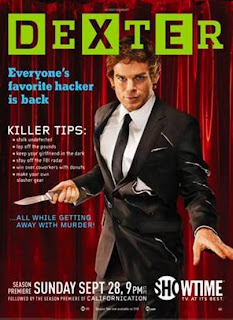


To scare up viewers for the series' third season, which began Sept. 28, Showtime produced a series of Dexter magazine covers.
I’ve read the credits for creative director, art director, photographers, and illustrator. All of you did great work. But who is the media director – the one who pulled off this coup?
Nice job.


Sunday, November 09, 2008
6 emerging lessons to understand the needs of poorer markets – and putting A2U to work for low literacy consumers.
To win and enhance customer loyalty in developing markets, manufacturers and retailers need to understand the difficulties faced by low-literacy consumers and create shopping environments that make them feel less vulnerable.
In a recent report, Dr. Madhubalan Viswanathan, associate professor of marketing at the University of Illinois, offered these 6 ways that companies can help customers make better purchases and avoid embarrassment:
1. Display prices and price reductions graphically -- a half-circle to indicate a 50% markdown, for example, or a picture of three one-dollar bills to indicate a purchase price of $3. Price products in whole and half numbers to make it easier for low-literacy consumers to calculate the price of, say, two bags of rice. These pricing practices are critically important in marketplaces where general stores and kiosks are being replaced by self-service stores, where there is less interaction between customer and store owner.
2. Clearly post unit prices in common formats across stores, brands and product categories to make it easier for low-literacy consumers to perform price/volume calculations.
3. Include illustrations of product categories on store signs to make it easier for low-literacy consumers to navigate new or refurbished stores. Similarly, use graphical representations of sizes, ingredients, instructions and other information to communicate product information more effectively in shelf and other in-store displays.
4. Put the ingredients required for the preparation of popular local dishes in the same section of the store. This would be helpful to low-literacy consumers who often envision the sequence of activities involved in fixing specific dishes to identify the ingredients and quantities they need to purchase. The same can be done for other domestic tasks.
5. Incorporate familiar visual elements -- such as color schemes or font types -- into new store concepts or redesigned brand logos to minimize confusion and anxiety among low-literacy shoppers and increase the likelihood that they will try new products and stores.
6. Create a friendly store environment by training store personnel to be sensitive to the needs of low-literacy shoppers and by verbally disclosing and consistently applying store policies. In addition, allow employees to form relationships with consumers by learning their names and offering small amounts of individualized assistance. This is particularly important for global brands and companies entering markets where foreigners are mistrusted or have accrued a history of mistreating people.
.JPG)
Overall, Dr. Viswanathan says, businesses must take note: An underserved and poorly understood consumer group is poised to become a driving force in economic and business development, by virtue of sheer numbers and rising globalization.
They are subsistence consumers -- people in developing nations like India who earn just a few dollars a day and lack access to basics such as education, health care and sanitation.
As these consumers gain access to income and information over the next decade, their combined purchasing power, already in the trillions of dollars, likely will grow at higher rates than that of consumers in industrialized nations. The lesson for multinational companies: Understanding and addressing the needs of the world's poorest consumers is likely to become a profitable, as well as a socially responsible, strategy.
You can hear a podcast interview with Dr. Viswanathan in which he talks about how companies can market to poor consumers without being seen as exploiting them. Go to
http://podcast.mktw.net/wsj/audio/20081020/pod-wsjjrviswanathan/pod-wsjjrviswanathan.mp3
In a recent report, Dr. Madhubalan Viswanathan, associate professor of marketing at the University of Illinois, offered these 6 ways that companies can help customers make better purchases and avoid embarrassment:
1. Display prices and price reductions graphically -- a half-circle to indicate a 50% markdown, for example, or a picture of three one-dollar bills to indicate a purchase price of $3. Price products in whole and half numbers to make it easier for low-literacy consumers to calculate the price of, say, two bags of rice. These pricing practices are critically important in marketplaces where general stores and kiosks are being replaced by self-service stores, where there is less interaction between customer and store owner.
2. Clearly post unit prices in common formats across stores, brands and product categories to make it easier for low-literacy consumers to perform price/volume calculations.
3. Include illustrations of product categories on store signs to make it easier for low-literacy consumers to navigate new or refurbished stores. Similarly, use graphical representations of sizes, ingredients, instructions and other information to communicate product information more effectively in shelf and other in-store displays.
4. Put the ingredients required for the preparation of popular local dishes in the same section of the store. This would be helpful to low-literacy consumers who often envision the sequence of activities involved in fixing specific dishes to identify the ingredients and quantities they need to purchase. The same can be done for other domestic tasks.
5. Incorporate familiar visual elements -- such as color schemes or font types -- into new store concepts or redesigned brand logos to minimize confusion and anxiety among low-literacy shoppers and increase the likelihood that they will try new products and stores.
6. Create a friendly store environment by training store personnel to be sensitive to the needs of low-literacy shoppers and by verbally disclosing and consistently applying store policies. In addition, allow employees to form relationships with consumers by learning their names and offering small amounts of individualized assistance. This is particularly important for global brands and companies entering markets where foreigners are mistrusted or have accrued a history of mistreating people.
.JPG)
Overall, Dr. Viswanathan says, businesses must take note: An underserved and poorly understood consumer group is poised to become a driving force in economic and business development, by virtue of sheer numbers and rising globalization.
They are subsistence consumers -- people in developing nations like India who earn just a few dollars a day and lack access to basics such as education, health care and sanitation.
As these consumers gain access to income and information over the next decade, their combined purchasing power, already in the trillions of dollars, likely will grow at higher rates than that of consumers in industrialized nations. The lesson for multinational companies: Understanding and addressing the needs of the world's poorest consumers is likely to become a profitable, as well as a socially responsible, strategy.
You can hear a podcast interview with Dr. Viswanathan in which he talks about how companies can market to poor consumers without being seen as exploiting them. Go to
http://podcast.mktw.net/wsj/audio/20081020/pod-wsjjrviswanathan/pod-wsjjrviswanathan.mp3
Wednesday, November 05, 2008
Paul Newman, the brand guy, taught us a lesson in his marketing model.
In remembering Paul Newman, he demonstrated that innovation is not something you pursue purely in hope of gaining competitive advantage; you do it to transform unlikely ideas into life-changing breakthroughs.
That’s what author Tim Manners wrote in Advertising Age.
Newman understood that the strongest kind of brand was simply the kind that he, himself, would make in his own kitchen.
That’s what author Tim Manners wrote in Advertising Age.
Newman understood that the strongest kind of brand was simply the kind that he, himself, would make in his own kitchen.
Tuesday, November 04, 2008
Have you had any “dumb ideas” lately? Why not?
Seth Godin, author of “The Purple Cow,” expanded his idea into the next step – “The Big Moo.” With 33 of the world’s smartest business thinkers collaborating on the book, “The Big Moo” will definitely inspire you to change remarkably.

With Seth’s encouragement (and permission), I share with you a chapter from the book. Check our library or call me to get a copy. I’m glad to pass one along to you.
THE POWER OF DUMB IDEAS
This will be the dumbest riff on marketing you will ever read. If you’re lucky.
Marketing is overwhelmed by complexity, and marketers’ pre-disposition toward creativity only complicates their job, their companies’ operations, and their own lives even more.
Ten years ago, the challenges were merely:
the advance of the five-hundred-channel universe
reconciling the historic tensions between marketing and sales
calculating the return on advertising investment
keeping abreast of fickle public taste.
Today, a quick look at Google indicates that we’re grappling with an eight-billion-channel world. The distinction between marketing and sales has evaporated in the face of direct-marketing technologies that brand products, take orders, and fulfill them at the same time.
Even worse, there is no more public taste. There are only publics’ tastes, which are ever more atomized, specific, and hard to fathom.
David Ogilvy’s contention that “it takes a big idea to attract the attention of consumers and get them to buy your product” no longer applies. His fellow advertising guru Bill Bernbach’s belief that, in marketing, “not to be different is virtually suicidal” today itself may be suicidal in and of itself.
The solution to marketing’s current ills is not more creativity.
It’s less.
Novelty for the sake of novelty is not only risky, it’s more often than not a recipe for irrelevance. A study of 1,300 publicly traded U.S. companies in fifty-five industries by Chuck Lucier, senior vice president emeritus at Booz Allen Hamilton, found that only four broad ideas, copied over and over again in one sector after another, accounted for 80 percent of the breakout businesses created between 1965 and 1995: power retailing, megabranding, focus/simplify/standardize, and the value chain bypass. True, the big-box store may not be the most original concept on Earth— which is exactly the point!
Originality hasn’t mattered a whit to the customers, employees, and shareholders who have enjoyed its application in consumer electronics (Circuit City), home improvement (Home Depot), and office supplies (Staples).
So what is the simple, dumb truth?
Imitation Across Industries Is More Efficient and Effective Than Blue-Sky Creativity and Innovation
If you accept that one million monkeys pounding on keyboards for one thousand years will eventually, accidentally produce a ton of gibberish and one Shakespearean sonnet, you must also accept the converse: that a lone creative individual racking her brain will produce much less gibberish, and nothing profound. Appropriating existing marketing concepts is cheaper—and certainly quicker to implement— than developing new ones.
The secret is bringing a great idea from another market or industry to your market or your industry.
The Energy Isn’t in the Idea; it’s in the Execution
Every manager, from the middle on up, knows that the secret to success lies not in strategy, but in galvanizing a team to implement the strategy. Lucier’s research on breakout businesses also showed that the winning companies in each market were those that put together a winning business system around the unoriginal ideas. The hard work of marketing lies not in developing a groundbreaking product or the communications scheme for it, but in coordinating the efforts of R&D, manufacturing, finance, communications, sales, or some set of subunits. Do this once, and you’ve created a cross-
functional team that knows how to do it over and over again, and whose enthusiasm itself communicates volumes.
You Must Create True Believers Before You Can Win New Converts
I once asked the president of a major U.S. auto company whether any studies had been done to determine which factors distinguished superior salespeople from average salespeople.
He responded that the only research he’d ever seen found no differences in age, education, sex, race, or family background, but did reveal one distinct variable: the number of times the individual went back and attempted to close the sale. Faith in yourself and in your colleagues is a necessary predisposition for marketers; the best ones convey that faith outward, eventually subsuming their customers and clients. The most powerful marketing ideas create and reinforce that kind of faith.
It’s Your Context That Counts
The big idea doesn’t have to be the brand-new idea. Something common to the world at large may be very new to you and your organization. This is more than enough to galvanize the team, create faith, and build the world’s greatest marketing department.
Three Dumb Ideas:
This may be a dumb idea, but what if we take our company’s private annual review and turn it into a full-blown, beautifully designed, public annual report? Surely, it would communicate our changes and strengths to the outside world—and it would also create immense new pride inside our globally dispersed company, more understanding of our strategy, and greater consistency in our numerous marketing efforts.
This may be a dumb idea, but what if we publish a book of our research and writing on enterprise resilience—not with a mainstream publisher who’ll take a year to get from manuscript to finished product, but by ourselves? Using existing vendors in graphic design, print-on-demand production, and online sales, we could complete the book in six weeks, stirring the members on the team to personally take it to their clients, discuss its contents, and build their business. In two years, we could publish six books, create our own imprint, sell thousands of copies, distribute tens of thousands more, garner major-media reviews, and create a publishing capability in a nonpublishing company.
This may be a dumb idea, but what if we create a diagnostic tool that uses principles of organizational economics to measure the effectiveness of large companies, then put it on the Web so that individuals can assess their own firms’ abilities? Less than a year later, there could be a 60,000-profile database, segmentable by country, sector, and function—and a thriving global practice in “Org DNA.”
An annual report. A book. An online survey. We did it well, and we did it together, knitting our internal communities and our external markets into a quilt that may be patchwork, but is exquisitely patterned nonetheless. This is the simplicity on the other side of marketing’s complexity.
Dumb enough for you?

With Seth’s encouragement (and permission), I share with you a chapter from the book. Check our library or call me to get a copy. I’m glad to pass one along to you.
THE POWER OF DUMB IDEAS
This will be the dumbest riff on marketing you will ever read. If you’re lucky.
Marketing is overwhelmed by complexity, and marketers’ pre-disposition toward creativity only complicates their job, their companies’ operations, and their own lives even more.
Ten years ago, the challenges were merely:
the advance of the five-hundred-channel universe
reconciling the historic tensions between marketing and sales
calculating the return on advertising investment
keeping abreast of fickle public taste.
Today, a quick look at Google indicates that we’re grappling with an eight-billion-channel world. The distinction between marketing and sales has evaporated in the face of direct-marketing technologies that brand products, take orders, and fulfill them at the same time.
Even worse, there is no more public taste. There are only publics’ tastes, which are ever more atomized, specific, and hard to fathom.
David Ogilvy’s contention that “it takes a big idea to attract the attention of consumers and get them to buy your product” no longer applies. His fellow advertising guru Bill Bernbach’s belief that, in marketing, “not to be different is virtually suicidal” today itself may be suicidal in and of itself.
The solution to marketing’s current ills is not more creativity.
It’s less.
Novelty for the sake of novelty is not only risky, it’s more often than not a recipe for irrelevance. A study of 1,300 publicly traded U.S. companies in fifty-five industries by Chuck Lucier, senior vice president emeritus at Booz Allen Hamilton, found that only four broad ideas, copied over and over again in one sector after another, accounted for 80 percent of the breakout businesses created between 1965 and 1995: power retailing, megabranding, focus/simplify/standardize, and the value chain bypass. True, the big-box store may not be the most original concept on Earth— which is exactly the point!
Originality hasn’t mattered a whit to the customers, employees, and shareholders who have enjoyed its application in consumer electronics (Circuit City), home improvement (Home Depot), and office supplies (Staples).
So what is the simple, dumb truth?
Imitation Across Industries Is More Efficient and Effective Than Blue-Sky Creativity and Innovation
If you accept that one million monkeys pounding on keyboards for one thousand years will eventually, accidentally produce a ton of gibberish and one Shakespearean sonnet, you must also accept the converse: that a lone creative individual racking her brain will produce much less gibberish, and nothing profound. Appropriating existing marketing concepts is cheaper—and certainly quicker to implement— than developing new ones.
The secret is bringing a great idea from another market or industry to your market or your industry.
The Energy Isn’t in the Idea; it’s in the Execution
Every manager, from the middle on up, knows that the secret to success lies not in strategy, but in galvanizing a team to implement the strategy. Lucier’s research on breakout businesses also showed that the winning companies in each market were those that put together a winning business system around the unoriginal ideas. The hard work of marketing lies not in developing a groundbreaking product or the communications scheme for it, but in coordinating the efforts of R&D, manufacturing, finance, communications, sales, or some set of subunits. Do this once, and you’ve created a cross-
functional team that knows how to do it over and over again, and whose enthusiasm itself communicates volumes.
You Must Create True Believers Before You Can Win New Converts
I once asked the president of a major U.S. auto company whether any studies had been done to determine which factors distinguished superior salespeople from average salespeople.
He responded that the only research he’d ever seen found no differences in age, education, sex, race, or family background, but did reveal one distinct variable: the number of times the individual went back and attempted to close the sale. Faith in yourself and in your colleagues is a necessary predisposition for marketers; the best ones convey that faith outward, eventually subsuming their customers and clients. The most powerful marketing ideas create and reinforce that kind of faith.
It’s Your Context That Counts
The big idea doesn’t have to be the brand-new idea. Something common to the world at large may be very new to you and your organization. This is more than enough to galvanize the team, create faith, and build the world’s greatest marketing department.
Three Dumb Ideas:
This may be a dumb idea, but what if we take our company’s private annual review and turn it into a full-blown, beautifully designed, public annual report? Surely, it would communicate our changes and strengths to the outside world—and it would also create immense new pride inside our globally dispersed company, more understanding of our strategy, and greater consistency in our numerous marketing efforts.
This may be a dumb idea, but what if we publish a book of our research and writing on enterprise resilience—not with a mainstream publisher who’ll take a year to get from manuscript to finished product, but by ourselves? Using existing vendors in graphic design, print-on-demand production, and online sales, we could complete the book in six weeks, stirring the members on the team to personally take it to their clients, discuss its contents, and build their business. In two years, we could publish six books, create our own imprint, sell thousands of copies, distribute tens of thousands more, garner major-media reviews, and create a publishing capability in a nonpublishing company.
This may be a dumb idea, but what if we create a diagnostic tool that uses principles of organizational economics to measure the effectiveness of large companies, then put it on the Web so that individuals can assess their own firms’ abilities? Less than a year later, there could be a 60,000-profile database, segmentable by country, sector, and function—and a thriving global practice in “Org DNA.”
An annual report. A book. An online survey. We did it well, and we did it together, knitting our internal communities and our external markets into a quilt that may be patchwork, but is exquisitely patterned nonetheless. This is the simplicity on the other side of marketing’s complexity.
Dumb enough for you?
Monday, November 03, 2008
Sync® from Ford: Live + online for a 360° marketing experience
There’s been plenty of talk about how to create a true social marketing that would leverage events with the web and connect to traditional leads. In recent workshop I attended, Connie Fontaine, manager of experiential and multi-cultural communications at Ford Motor Company, showed how it can actually be done.
The brand is Sync, a feature created by a partnership of Ford with Microsoft. It lets a Ford driver control the radio, phone, and MP3 components with vocalized commands. (read more about it at http://www.syncmyride.com)
Connie described a rather engrossing ethnic networking/social media/viral crusade featuring young teen friends, Kim and Seana. They crossed the country performing and delivered videos of their adventures along the way. While the webisodes may have seemed somewhat scripted, the women were real. In fact, Connie surprised the group at the end of her talk by having Kim, the singer/songwriter of the pair, perform a song live. While it might be a tough crowd – more than a hundred marketers in a conference room – she proved herself to be a genuine buzz-builder. (see more about it at http://syncmymusic.msn.com/)

This allowed Connie to summarize the Ford Sync approach to engaging and connecting the events to lead-generation:
• Act different…Have fun!
• Be relevant…What do people want? Where?
• Be entertaining
• Be vital, integral part of plan
If you are thinking about live + online for a 360° marketing experience, what are the potential applications for health, science, and technology marketers?
When you develop an event with Stinson Brand Innovation, your team can integrate both live and online media to meet your objectives. We consider how tactics can be connected from branded events to social networking to lead generation.
The brand is Sync, a feature created by a partnership of Ford with Microsoft. It lets a Ford driver control the radio, phone, and MP3 components with vocalized commands. (read more about it at http://www.syncmyride.com)
Connie described a rather engrossing ethnic networking/social media/viral crusade featuring young teen friends, Kim and Seana. They crossed the country performing and delivered videos of their adventures along the way. While the webisodes may have seemed somewhat scripted, the women were real. In fact, Connie surprised the group at the end of her talk by having Kim, the singer/songwriter of the pair, perform a song live. While it might be a tough crowd – more than a hundred marketers in a conference room – she proved herself to be a genuine buzz-builder. (see more about it at http://syncmymusic.msn.com/)

This allowed Connie to summarize the Ford Sync approach to engaging and connecting the events to lead-generation:
• Act different…Have fun!
• Be relevant…What do people want? Where?
• Be entertaining
• Be vital, integral part of plan
If you are thinking about live + online for a 360° marketing experience, what are the potential applications for health, science, and technology marketers?
When you develop an event with Stinson Brand Innovation, your team can integrate both live and online media to meet your objectives. We consider how tactics can be connected from branded events to social networking to lead generation.
Thursday, October 30, 2008
Could you tell your story in a haiku?
Here’s an interesting idea from John Marden, a marketer & new business developer with Marden Marketing in the Twin Cities. He says:
When I am looking
to make copy clear, I use
the simple haiku.
It forces you to
trim out excess words. Focus
on the customer.
For final copy, break out of the strict haiku rules and sentence structure.
With just a quick look at an offering of a pre-paid pass that allows the purchaser to get into attractions/museums/sites:
"See all the best sights
in your favorite city
with one easy pass."
or
"Visit attractions
in your favorite city.
All for one low price!
You get the idea.
When I am looking
to make copy clear, I use
the simple haiku.
It forces you to
trim out excess words. Focus
on the customer.
For final copy, break out of the strict haiku rules and sentence structure.
With just a quick look at an offering of a pre-paid pass that allows the purchaser to get into attractions/museums/sites:
"See all the best sights
in your favorite city
with one easy pass."
or
"Visit attractions
in your favorite city.
All for one low price!
You get the idea.
Subscribe to:
Posts (Atom)

