Thursday, May 26, 2011

6 key drives that have propelled Genentech to the top reputation in oncology

In one recent study of company reputation in oncology, Genentech occupied a tier of its own, with a significant lead over second-tier companies Novartis, Amgen, Eli Lilly, Pfizer, and Sanofi-Aventis.  Third-tier includes Takeda/Millennium, Celgene, GSK, AstraZeneca, Bristol-Myers Squibb, and Roche. The fourth-tier companies were Bayer Healthcare, Eisai, and J&J.

Genentech’s strong performance on the key driver attributes (those measures that are most important in driving perceptions of overall company performance) is responsible for propelling it into the top spot. In fact, Genentech ranks first on all six key driver attributes, with a significant lead over all other companies on all but one of the six.

The six key drivers are:
  1. The company is developing beneficial products
  2. The company shows increasing strength in oncology
  3. The company has an innovative R&D
  4. A company that I can trust
  5. Sales reps respect a physician’s time
  6. Sales reps are knowledgeable about a company’s products

Monday, May 23, 2011

Gout & Uric Acid Education Society brought evidence-based information resources to Internal Medicine conference

Getting the word out about preventing and treating gouty arthritis has new urgency with the number of Americans suffering from this form of arthritis now topping the 8 million mark. If left untreated, gout can be disabling. Gout is also associated with other serious health conditions, making it a complex diagnosis and treatment challenge for physicians. In addition to the core patient demographic of men age 40 plus, post-menopausal women are at increased risk.

To help bridge the information gap, for the first time, the nonprofit Gout & Uric Acid Education Society (GUAES) reached out to primary care providers during the American College of Physicians Internal Medicine 2011 conference in San Diego in April.

What is Gout?

Gout is caused by an accumulation of sodium urate crystals in the joints and other tissues. These crystals form when there is an abnormally high level of uric acid in the blood (a condition known as hyperuricemia).

"Early diagnosis and treatment, along with an understanding of co-morbidities is critical in helping patients gain control of this disease and continue to live an active lifestyle," said N. Lawrence Edwards, MD, GUAES chairman. He noted that serum urate is not part of the metabolic blood work panel but that elevated uric acid can be a precursor to gout. A uric acid level of 6.0 mg/DL or below is desirable.

At the Internal Medicine 2011 conference, GUAES representatives provided peer-reviewed information sources on the latest research, diagnosis and treatment solutions for this potentially disabling form of arthritis.

Complimentary patient educational tools were also available.

Medical professionals can access GUAES resources and pose questions to the organization's medical experts online by visiting www.gouteducation.org

More About Gout

Gout, which affects approximately 8.3 million Americans, is one of the most painful forms of arthritis and the most common form of inflammatory arthritis among adults. Patients describe the pain of an attack as one that rivals the fracture of long bones. Gout causes sudden intense pain and swelling in the joints. Following their first attack of gout, approximately 60 percent of patients will experience another attack within the first year. If gout is left untreated it can lead to permanent joint damage and destruction of tissue.

About the Gout & Uric Acid Education Society and Gout Awareness Day
Formed in September 2005, the Gout & Uric Acid Education Society has a comprehensive patient education brochure, as well as a user-friendly Web site for patients, caregivers, family members and healthcare providers.

For more information about gout and the Gout & Uric Acid Education Society, please visit www.gouteducation.org.

Thursday, May 19, 2011

Achieving growth objectives through innovation

One driver for innovation programs in health, science, and technology organizations is to achieve growth objectives.  Leading business experts note that companies cannot grow through cost reduction and reengineering alone.  Innovation is a key element in providing aggressive top-line growth and for increasing bottom-line results.

A survey across a large number of manufacturing and services organizations found, ranked in decreasing order of popularity, that systematic programs of organizational innovation are most frequently driven by:
  1. Improved quality
  2. Creation of new markets
  3. Extension of the product range
  4. Reduced labor costs
  5. Improved production processes
  6. Reduced materials
  7. Reduced environmental damage
  8. Replacement of products/services
  9. Reduced energy consumption
  10. Conformance to regulations
I like this list of goals because it shows the breadth of improvements possible to products, processes and services.  Also because it runs counter to a prevailing impression that innovation focuses mostly on new product development.

These goals also demonstrate the variety of disciplines and departments that must be engaged to realize measurable impact of innovation.  A debate triggered by the book, Freakonomics, is whether we should be measuring the process of innovation or the results of innovation.  One point of view says, innovation can be measured by the additional profit it generates and expressed as a return on the investments made for that purpose. At the level of the industry or even economy as a whole, economists should use the concept of “total factor productivity.”

Others say what’s important is the journey to the end result. They argue that the focus should be on the means rather than the end — organizations shouldn’t think of innovation as something they can buy; rather, they need to put in place structures to support the process of innovation.

Monday, May 16, 2011

The Difference Between “Brainstorming” and N-of-8

Creative thinking is no longer a skill that’s nice to have. As innovation takes center stage in the business arena, organizations have begun to demand that their people think creatively. It is a vital capability for any company that wants to ensure it is on the cutting edge of its field or category.

Because I work for a creative company, I regularly find myself questioning the best ways for an organization to think creatively. But the truth is that all companies need to be creative and innovative (especially at times like this).  That’s why this is a topic which should interest anyone. It should not be considered the sole right and territory of people in the so-called creative industries.

To help their people think creatively, companies are always looking for tools, techniques, and processes designed to generate unique and effective outcomes. One tried and true creative thinking tool—brainstorming—is making a comeback in offices everywhere. Go to the Web and search “brainstorming” to find thousands of sites on the topic.

But there’s a difference between a brainstorming session and an N-of-8 experience.

If not conducted properly, a brainstorming session becomes chaotic and directionless, and thus viewed by the participants as a waste of time. But if you take the time to create an N-of-8 experience, you’ll be amazed at what you can achieve in a short, focused time period.

One of the regular debates that come up in my world is balancing the need to treat and respect creativity of the individual with the power of group thinking to drive creativity. We all recognize that certain people are more blessed with powers of creative thinking than others.  This offers even more reasons to use an N-of-8 session instead of brainstorming.

When you call it innovation, instead of creativity, you open up the participants.
  • Creativity suggests an exclusive activity limited to people who can draw, who are artistic, and who are conspicuously right-brained.
  • Innovation is something to which anyone can contribute, as long as they are committed to working harder to build the knowledge base required for effective innovation.
Focus on strategic problem-solving, instead of simply quantity of ideas. Understand the brand, the business objectives, and the target customers.  This may sound like simple stuff, but it doesn’t have to be over-complex. Brainstorming has grown to connote “no rules or limits” even the admonition “there are no bad ideas.”  But without focus, idea generation lacks the basic requirements and definition of success, and becomes useless. So neither individual nor group thinking is helpful unless there is clear agreement on the definition of success. An N-of-8 session as described in this book offers that definition and purpose.

Another difference between brainstorming and this N-of-8 thinking is the use of guidance, facilitation, and focus. Too many teams just get in a room to “blue sky” about a particular issue. Without a leader, a brainstorming group can't think effectively. We might as well be exchanging emails or instant messages. When the leader's techniques are inspired by N-of-8, there is a clear method.

There are three key things a leader of an N-of-8 provides:
  • an environment that is conducive to innovation;
  • an experience fresh and exciting; and
  • a pace that gets and keeps the ideas flowing.
What if we went so far as to ban brainstorming (the word) and encourage N-of-8 thinking?
What's the difference...just words, or something more fundamental?

First up, words are fundamental, and the language you put around something will shape people's attitude towards it.

Second, it's about the difference between thinking in series or in parallel. Imagine a group of people as a collection of computers; then connect all those computers together, get them working on a single computation, and you will have access to massive computing power. But if you use them each individually and set them off computing on the same problem, they will do it no more effectively or quickly than one computer alone. That's the difference between a bunch of individuals all firing out their ideas, and a connected group of people thinking together powerfully.

Brainstorming to me implies the former...chaos, individualism, and too greater emphasis of divergent thinking. N-of-8 thinking allows for individual divergent thinking, yet disciplines it and captures it in a collective and convergent format. That's where the value lies.

Thursday, April 28, 2011

Stinson Joins GSW Worldwide

Dear Clients & Friends:

I’m pleased to share with you the news that I have joined GSW Worldwide, an inVentiv Health company and one of the largest healthcare advertising agencies in the world.

For the past 7 years as President of Stinson Brand Innovation, I have enjoyed building a brand consultancy for health, science, and technology products. Now with my integration into GSW Worldwide, we will be able to expand these brand strategy and account planning capabilities.

As of May 1, I am moving my operations to the GSW Worldwide office in Columbus, Ohio, where I will serve as Senior Vice President of Account Planning to lead the strategy and branding process for current and new clients. Other Stinson Brand Innovation staff members will also have various roles at GSW Worldwide.
I’m excited about joining such a well recognized and admired agency as GSW Worldwide. Our approach is aligned with the culture and branding philosophy of GSW Worldwide, so I believe our combination has a lot to offer clients. I see it taking our tools to a whole new level.

Thank you to our most valued clients and supporters who played a part in Stinson Brand Innovation over the years. And we look forward to working with you in the future at GSW Worldwide.

Tuesday, April 26, 2011

8 thoughts on using our N-of-8 creative group tool

Overall, the applications of N-of-8 are many and varied.  So, here are some thoughts on using this creative group innovation model and increasing its benefit to your efforts.


  • Be aware that your brand has a purpose; stay true to it
  • Begin the process of finding the essence behind the innovation; seek meaning
  • Acknowledge the pursuit of new ideas may be a sign of needed change or a warning signal of distraction from the core business
  • Beware of simply restless energy
  • Realize that what you’re listening for may be all you hear; stay open
  • Notice when you feel a need to respond to input; avoid defensiveness
  • Trust the process and be guided by it; don’t force it
    Write a journal of your experiences; share your thoughts and results with others

Thursday, April 21, 2011

The Impact of Innovation: Comparing Edison and Tesla

The concept of “innovation” has been deliberated in a array of frameworks including its impact on technology, commerce, society, economies, and policies.

A consistent theme comes through: innovation is the successful introduction of something new and useful – like new methods, techniques, or practices or new or altered products and services.

An vital distinction is generally made between invention and innovation:
  • Invention is the first occurrence of an idea for a new product or process
  • Innovation is the first attempt to carry it out into practice
In business, some say that innovation can be distinguished simply from invention: Invention is the conversion of cash into ideas. Innovation is the conversion of ideas into cash.

This is observed by comparing Thomas Edison with Nikola Tesla. Thomas Edison was as innovator because he made money from his ideas. Nikola Tesla was an inventor. Tesla spent money to create his inventions but was unable to monetize them.

So, in the context of our work and this book, innovation occurs when someone uses an invention or an idea to change how medicine works, how scientists organize research, or how technology changes lives.

And that’s why N-of-8 certainly involves creativity, but is not limited to it.  Because the resulting innovations should involve acting on the creative ideas to make some specific and tangible difference.  For innovation to make the greatest impact, something more than the generation of a creative idea or insight is required.  The insight must be put into action to make a genuine difference, resulting for example in new or altered business processes or changes in the products and services provided.

Wednesday, April 20, 2011

How we've applied N-of-8 to uncover new product concepts

Using N-of-8 for new brand concepts can generate high potential new product and service ideas.

The “open innovation” approach has long been taken by successful innovators, but it remains difficult – because the “not invented here” syndrome is seductive and stubborn to overcome.

Going outside for ideas is much more complex than internally, because so many external groups of stakeholders may offer insights of value.  Here are several ways we have applied the N-of-8 tool to uncover new product concepts:
  • 8 Individual Interviews – you can begin quickly and easily this by reaching out and speaking with people.  Many customers, partners and influencers will willingly share their thoughts if you only ask them. While a discussion guide can be helpful, these interviews should be fairly unstructured to allow for rich conversations and idea generation.
  • 8 Participants in a Group – assembling eight people in a session with a skilled moderator that leads the discussion and helps participants walk through problems and explore possible solutions.
  • 8 Views of Reverse Engineering – this well-known tactic involves buying and analyzing competitive products to understand the thinking and engineering behind them. In the application of N-of-8 on this analysis, generate 8 unique angles on product or service ideas.
  • 8 Intermediaries – create a group from entities such as brokers, agents, venture capitalists, and academic researchers.  Then, provide the client with raw or market-ready ideas. (You could even involve the intermediaries in the development later.)
  • 8 Licensing Pitches – like intermediaries, other companies can be a source of ideas and frequently present at public conferences.  By listening to presentation by companies that are open to licensing their ideas, you can potentially gain ideas to accelerate innovation..
  • 8 Partners in Co-creation – at the end of the external innovation spectrum is joint development of product ideas.  In this methodology, you connect with eight customers, partners, complementors, or even competitors to share in idea generation and product development.
  • 8 Ethnographic Observations – this involves closely observing the user experience – how users go about their lives, the problems they encounter, and how they interact with your product or service.  Many needs are unknown to the customer, and can only be discovered through in-depth observation. Because this shadowing is done in a native environment, your team can identify new areas of opportunities.
These tactics and methodologies are a menu of choices, not a rigid list.  They represent not only our experience, but also the thinking of innovation thought-leaders.  You can design and continually refine your external idea generation programs using this N-of-8 framework and these tactics as a guide.

Thursday, April 14, 2011

Join us this month in standing up to sexual abuse in Native American communities

Did you know that Native Americans have the second highest rate of child abuse in the United States and it is estimated that 1 in 4 girls and 1 in 7 boys are being sexually abused? Additionally, there are fewer than 10 Native Child Advocacy Centers in the United States compared to over 700 Centers that serve non-native populations.

Along with our client, NACA, we believe this is unacceptable. That's why, this April, on behalf of Sexual Assault Awareness Month (SAAM), we hope that you will join us in bringing awareness to this tragedy - which is devastating Indian communities throughout the United States.

According to the National Sexual Violence Resource Center, "The goal of SAAM is to raise public awareness about sexual violence and to educate communities and individuals on how to prevent sexual violence."On behalf of the native children who are victims of these horrible crimes, we encourage you to support NACA this month by:
  • Donating - Our services are made possible through the support of individuals like you. We are outside the traditional funding sources and our communities need your support. Please consider making a monthly conribution to held end child sexual abuse. With your help - we can make this happen! Every dollar donated helps a child like the one you see here.
  • Volunteering - There are many ways that you can volunteer in your comunity. For example:
    1. Invite your friends and family to watch the documentary "Lost Sparrow", a film that addresses the death of two adopted Crow Indian boys and the sexual abuse of their sister.
    2. Host a bake sale at your work or organizations  or...
    3. Help your children hold a lemonade/hot chocolate stand and donate the proceeds to NACA.
  • Advocating - Share what we do with others! Join us on facebook and twitter pages and help us spread our message and mission. Please also forward our e-newsletters on to your co-workers, friends, and family.
Only with your support can we put an end to child sexual abuse. Thank you for joining us in our mission!

Tuesday, April 12, 2011

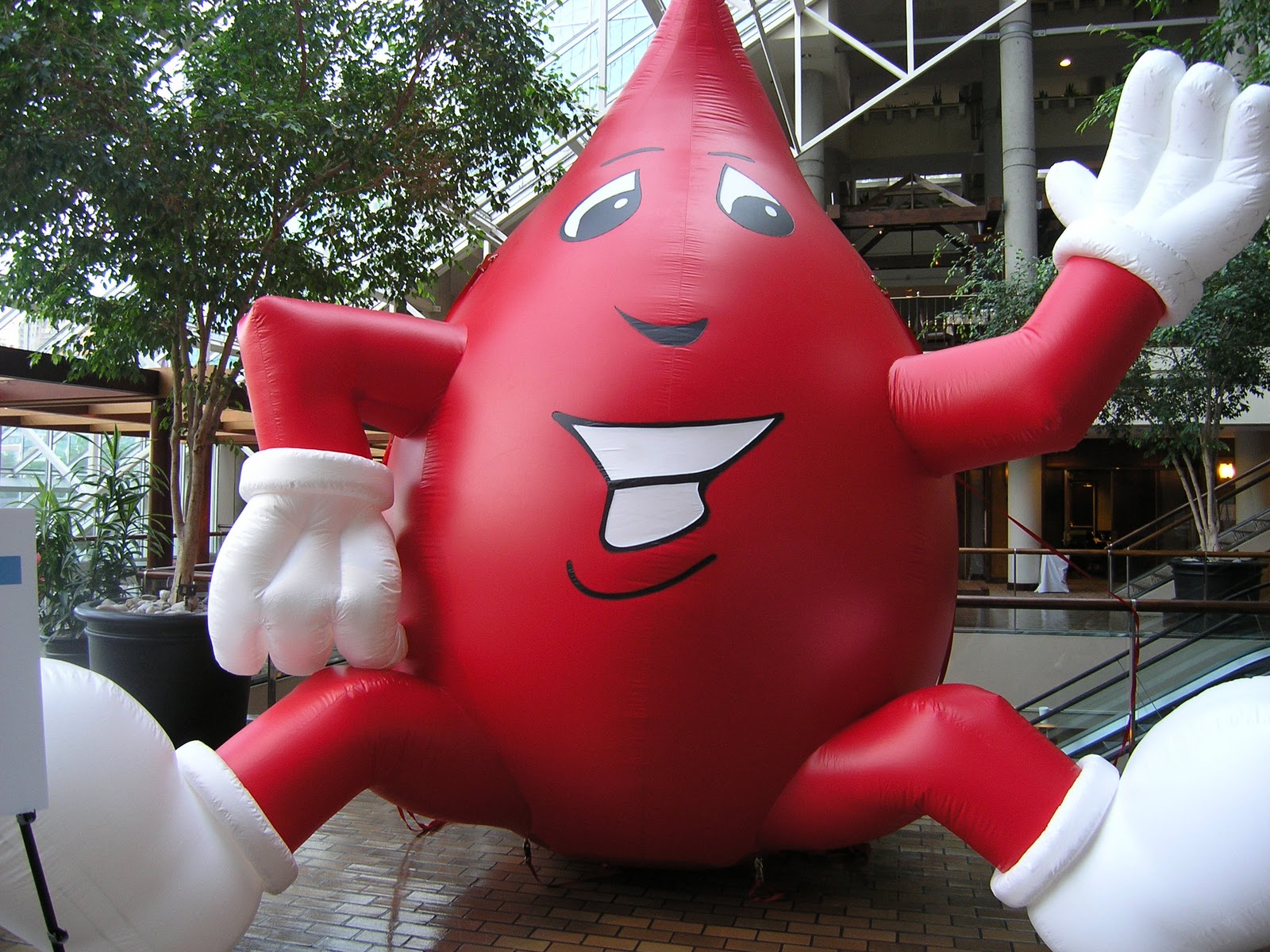
N-of-8 case study -- “Redefining the Donor Experience”

With blood donations not increasing in years and blood centers looking for new creative methods to attract blood donors, I worked with Fenwal Blood Technologies to facilitate an N-of-8 advisory board with members of the ADRP (Association of Donor Recruitment Professionals).  During the group, we also employed an exercise using the ACTION SHOES® framework to explore six specific areas.

Inspired by Edward de Bono’s thinking-hat metaphor, ACTION SHOES® is a framework for shifting from thinking to action. The need for perfectly appropriate action suggests a need for breaking down action into six different styles, each of which could be developed.
The six ACTION SHOES® are as follows:
  1. Navy formal shoes: Routine and formal procedures.
  2. Brown wingtips: Practicality and pragmatism.
  3. Grey sneakers: Exploration, investigation, and collection of evidence.
  4. Pink slippers: Care, compassion, and attention to human feelings and sensitivities.
  5. Orange gumboots: Emergency action, with prime concern for safety.
  6. Purple riding boots: Action by virtue of position or authority.
For sure, action situations are rarely as simple as thinking situations and there is often a need to do two things at a time. So, the exercise plays on the possibility of wearing many different shoes to signify a combination of responses to a situation.

During the N-of-8 advisory board, the idea emerged to benchmark the customer experiences of brands including The Ritz Carlton hotels, Disney, and Starbucks.

As an action directly from the N-of-8 group, STINSON planned a dinner symposium for blood bank executives around the idea of “Redefining the Customer Experience.” The symposium consisted of speakers from name brand customer service organizations including The Ritz Carlton, Disney Institute, and author of The Starbucks Experience.

The forum included opportunities for executives to interact with the expert speakers as well as a book signing after the event. Executives left with ideas and education for enhancing the blood donation experience.

Joseph Michelli, Ph.D. author of The Starbucks Experience, Scott Milligan from The Disney Institute, and Alexandra Valentin from The Ritz-Carlton shared their secrets to creating the ultimate customer experience.

Here are some highlights.

At The Ritz-Carlton, all employees are trained on the gold standard and in creating a “home away from home” for their guests. In their motto, they refer to themselves as “ladies and gentlemen serving ladies and gentlemen,” reinforcing their position as service professionals. Core to their culture is treating each other with respect, which in turn reflects on their attitude towards their customers.

Another key to the Ritz’s success is recruiting for key talents, which includes work ethic, self-esteem, service, and empathy. By hiring employees that fit their purpose and strategy, they are able to sustain the high standards to which they aspire, and employ a happy, engaged work force. To ensure this is the case, they measure employee and customer satisfaction on a regular basis.

At The Ritz-Carlton, a “spirit of service excellence” starts at the top. They believe that if their leaders engage with employees at an emotional level, their employees will engage their customers in the same way.

With these talents in place, the Ritz is comfortable empowering each employee to solve guest issues on the spot, without the involvement of a manager, and spend up to $2,000 per customer.

The Ritz-Carlton’s 3 Steps to Service
  1. A warm and sincere greeting. Use the guest’s name.
  2. Anticipation and fulfillment of each guest’s need.
  3. A warm good-bye. Use the guest’s name.
How has Starbucks transformed the coffee drinking experience from ordinary to extraordinary? By empowering their employees to provide the ultimate customer experience.

Starbucks believes the key to its success is its people, and the special experience they create for the customer. Starbucks’ unique employee culture provides a sense of ownership, starting with a leadership vision and commitment to drive innovation into the culture.

In driving innovation, Starbucks employees are encouraged to suggest new ideas. Starbucks has processes in place to generate, evaluate, and implement these ideas—supporting an entrepreneurial spirit.

But, at the core of their culture, and what Starbucks does, is “sell an experience.” This, in turn, is driving customer loyalty with an average 18 return visits a month.

In empowering their employees to create the “ultimate customer experience,” Starbucks has defined its “Five Ways of Being.” These are outlined in the Starbucks “Green Apron Book,” a pocket sized book that every employee receives. The following “Five Ways of Being” are necessary to be a successful Starbucks employee:
  1. Be welcoming
  2. Be genuine
  3. Be considerate
  4. Be knowledgeable
  5. Be involved
What do you think is one of the most common questions asked at Disney? Would you believe it is, “When is the 3 o’clock parade?”

However, Disney employees understand this is probably indicative of another question the person wants to know such as, “Does the parade start on time?” or “Where is a good place to watch the parade?” So, a Disney employee may respond, “The parade typically starts on time at 3:00 p.m. in Liberty Square, and if you sit here you’ll have a good place to watch in the shade.”

At Disney, it’s not about the rides and the attractions, it is about the experience and “making people happy.” This requires that they know their guests, anticipate their needs, and pay attention to every detail.

For example, they know convenience is important. So, one of the many conveniences they offer their guests is the ability to buy souvenirs and pick them up as they leave at a location near the parking lot. They also know the importance of cleanliness, which is another top priority for Disney. Service is a primary theme at Disney, and as they explain, they “create happiness,” and make every effort to ensure every touch point and experience supports that objective.

The Disney Institute shared these concepts with us and also presents on topics including Leadership, Quality Service, People Management, and Teamwork in formats including
keynote speeches, half-day workshops, and multi-day experiences. Their programs showcase proven Disney strategies and success formulas easily adaptable to any industry.

Take-aways for the blood banking industry:
  • What talents do you need to recruit to fit your purpose and strategy?
  • How do you drive a service-driven culture from the top?
  • What are the guiding principles for your employees in ensuring the “ultimate donor experience?”
  • What problems or challenges do blood donors encounter that can be minimized or prevented?
  • When a donor asks a question, what is it that they really want to understand, and how can you help your employees recognize this?
  • What else can be done to anticipate and fulfill donor needs and expectations, and how do you engage your employees in the process?

Monday, April 11, 2011

8 types of dreams - and how to use them for inspiration with N-of-8

I’ve often found innovative insights through “forced connection.” When I give concentrated attention to seemingly random information or visuals, I allow my brain to process it and find a new relationship or meaning. This leads to original ideas or original ways to implement them.

So for my upcoming book, I have been collecting a variety of “top 8” lists to use for inspiration for N-of-8 exercises. They contain seeds and sources of ideas that can applied to an array of challenges.

Here is a list of 8 types of dreams:
  1. Richness dreams - Dreamer will get some prize or winnings. It can be in different forms, from people becoming magnates or winning some lottery. In some cases, it’s about glory not riches.
  2. Despair dreams - Dreamer has a problem to achieve very familiar goals. For example, packing his luggage, finding the car where he parked, catching a train or plane. In other situations, dreamer needs money, but he doesn’t know how to get it. 
  3. Traveling dreams - These can be concrete about the travel to some place. Or it might be abstract, flying in the wind or space. These dreams are about freedom, need, or something to own.
  4. Downfall dreams - Dreamer is falling down from the skycraper, bridge, airplane. Dream experience is about downfall sense. People are awakened as soon as they fall down. This dream is about situations in which the dreamer is afraid.
  5. Pursuit dreams - People, animals, or the natural elements (flood or avalanche) hunt the dreamer. It’s symbol of hidden scare.
  6. Hanging in the snare dreams - Dreamer is stranded in cellar, cave, or prison and can’t go out. In some similar dreams, the dreamer is in danger of explosion or crashing into something. These dreams are symbols of hidden fears.
  7. Nude dreams - These dreams present some frustration or the feeling of being undervalued.
  8. Violence dreams - In some cases, the dreamer attacks someone. This dream is about trying to restrain one’s anger.
Consider collecting your own lists, quotes, and articles. From books, magazines, biographies, the Bible (or other religious texts), newspapers, trade journals, best-selling songs, and many more sources. And if you have a favorite list, I hope you’ll share it with me.

Thursday, April 07, 2011

What do you do after the “storm”? Another difference of N-of-8

We get calls quite frequently from clients that want us to help facilitate a brainstorming session. Since we’re experienced facilitators, they know we have methodologies to ensure a successfully defined and well-conducted event. The one question, however, that really starts to lead to N-of-8 instead of brainstorming is this:  What will you do with the ideas after the session?

You see, an N-of-8 is seen as a beginning, not an end. Too many people see the brainstorming meeting as the desired result, rather than just a beginning step in a process to build new products, new tactical initiatives, and new customer services. Generating good ideas is not necessarily easy, but with the right preparation and facilitation you can generate hundreds of ideas, and rank or prioritize those ideas to identify the top 10, or top 20.

What becomes more interesting, and adds more value, is the next step of an N-of-8.

Once ideas are generated, N-of-8 provides a mechanism to consider, evaluate, and determine which ideas to pilot or prototype. It considers the mechanisms for commercialization. Without these subsequent steps, your ideation is just creating ideas that for the most part will never be considered after the event.

So, the most important questions you can ask to contrast the need for brainstorming versus N-of-8 are:
  • Can you describe how these ideas will be acted upon once the session is completed? 
  • In three months, what will be the anticipated results of these ideas?
If you can't get a good answer to questions like these, then the session is either not well planned or the outcomes are uncertain.  In both instances, you're headed for frustration.

On the other hand, if you ask those questions and get confident, specific answers, then you’ll be sure your N-of-8 session can be the catalyst for something even better. The important issue isn't the idea generation of brainstorming, but the work you do after the N-of-8 session, how that work is managed,and who is responsible for doing that work.

Tuesday, April 05, 2011

8 Ways to be a good customer

I've written a lot in this blog about brands that create better customer experiences. And about how you can improve your customer service.

But what about improving THE CUSTOMER.  Let's start with ourselves. Here are 8 ways we can be better customers of the brands, stores, and services we use:
  1. Participate in Customer Relationship Systems - Be sure you are on the company's mailing list. Make sure that they have accurate contact information for you. Subscribe to their email newsletter.
  2. Speak Up - If you are a satisfied customer let them know. Write an old-fashioned letter. It's hard to pass around copies of a voicemail or recorded call center call.
  3. Offer Constructive Criticism - If there is a way they can improve a product,service or experience offer them constructive criticism. Even great companies have many areas that can stand improvement.
  4. Link To Them - Of course, I'll assume you have a e-newsletter or a blog. If you like a company or product say so by linking to them and talking about why you like them.
  5. Comment on Their Corporate Blog - show your support for a company or product you like by being active in the community and conversations they\ are fostering on their blogs and newsletters.
  6. Respond to Surveys and Questionnaires - If a business you value asks for your input give it to them. Yes, we're all busy these days but your input might make or break a new initiative that you would value or conversely it might save you pain and loss of time in the future.
  7. Refer a Friend or Colleague - Share your good experiences with your network.What goes around comes around. This is a pathway to discovering new great people to do business with.
  8. Buy Their Product, Service or Experience - Continue to support the businesses you value by being a repeat customer.

Monday, April 04, 2011

Health book review -- The Panic Virus: A True Story of Medicine, Science, and Fear, by Seth Mnookin

In his book The Panic Virus, journalist Seth Mnookin takes aim at the enduring myth (believed by about a quarter of U.S. parents) that
childhood vaccines can lead to autism or other developmental disorders.

Mnookin, a Vanity Fair writer and a longtime media reporter, shines a particularly blinding light on journalists, who have often been too eager to uncritically repeat frightening vaccine conspiracies and, in some cases, publish their own gotcha coverage, exacerbating the panic without the evidence to back it up.

Here are a few reviews from newspapers around the country, compiled by The Week magazine.

“It takes guts to write a book informing aggrieved parents that they’re wrong about the source of their child’s disorder,” said James E. McWilliams in The Austin American-Statesman. While he’s “consistently respectful of the emotional pain that autism can cause,” Mnookin “pulls no punches” when assigning blame for the vaccine scare. He’s mounted a devastating case against various opportunists—from journalists to doctors to personal-injury lawyers—who’ve profited from playing on parents’ fears. Yet his work might be most interesting when it explores why “so many well-educated Americans” have proved susceptible to the autism myth.

The principal profiteers are fairly easily dispatched, said Susannah Nesmith in The Miami Herald. Chief among them is former British surgeon Andrew Wakefield, whose 1998 study linking vaccines to autism continues to be disseminated despite the fact that it’s been thoroughly discredited and was eventually retracted by the medical journal that first published it. Wakefield “stood to gain millions” on an alternative vaccine, and just last month a rival journal released investigation results indicating that he had actually falsified key data in his study. Mnookin is “unsparing” in his critique of the media’s role in keeping debate about the issue alive, said Sandra G. Boodman in The Washington Post. Even as evidence for the safety of immunization shots became overwhelming, “ratings-hungry” producers treated the argument as unsettled. Unvaccinated children have died as a result—of mumps, whooping cough, and other diseases that vaccination once defeated.

Mnookin rightly identifies a larger cultural trend as the true cause of the immunization panic, said John Wilkens in The San Diego Union-Tribune. In the Internet era, studies like Wakefield’s never die and conspiracy theories flourish: “The like-minded find each other and form communities online, reinforcing their biases and their certitude.” Mnookin calls the trend “cognitive relativism,” and shows us how it’s creating a world in which facts and true expertise can’t win arguments against fears and suspicions. When one consequence is that the population at large is now threatened by the return of 19th-century diseases, Mnookin’s warning is “a message too important to ignore.”

Thursday, March 31, 2011

8 steps to a “bad day” turnaround

We can all have our share of lousy days. You know the kind I mean — demanding clients, grouchy co-workers, unpleasant reviews.  And when the stress on the personal side of life collides, it can make for a really epic bad day.  

So what can you do to turn it around?

Gretchen Rubin, author of The Happiness Project, offers these tips, to help turn a terrible day into possibly a terrific one.
  1. Resist the urge to “treat” yourself – instead do something nice for someone else. Often, the things we choose as “treats” aren’t good for us. The pleasure lasts a minute, but then feelings of guilt, loss of control, and other negative consequences just deepen the lousiness of the day.  “Do good, feel good” – this really works. Be selfless, if only for selfish reasons.
  2. Seek inner peace through outer order. Soothe yourself by tackling a messy closet, an untidy desk, or crowded countertops. The sense of tangible progress, control, and orderliness can be a comfort.
  3. Exercise is an extremely effective mood booster – but be careful of exercise that allows you to ruminate. For example, if I go for a walk when I’m upset about something, I often end up feeling worse, because the walk provides me with uninterrupted time in which to dwell obsessively on my troubles.
  4. Stay in contact. When you’re having a lousy day, it’s tempting to retreat into isolation. Studies show, though, that contact with other people boosts mood.
  5. Things really will look brighter in the morning. Go to bed early and start the next day anew. Also, sleep deprivation puts a drag on mood in the best of circumstances, so a little extra sleep will do you good.
  6. Remind yourself of your other identities. If you feel like a loser at work, send out a blast email to engage with college friends. If you think members of the PTA are mad at you, don’t miss the spinning classwhere everyone knows and likes you.
  7. Keep perspective. Ask yourself: “Will this matter in a month? In a year?”
  8. Write it down. When something horrible is consuming my mind, I find that if I write up a paragraph or two about the situation, I get immense relief.

Wednesday, March 30, 2011

N-of-8 web-based focus groups

One of the more enjoyable parts of my job is web-based N-of-8® focus groups.  I've really appreciate both the tool and the technology -- and how much it helps me learn and understand our customer's current situation, ideas, challenges, and goals.

During these sessions, I try to practice "active listening," making a conscious effort to hear more than the words, but also to understand the total message being sent.

Friday, March 25, 2011

8 references used in my "Change Agent" presentation


I had a really great time in Dubai with my client and the team of about 200 managers from around the world.  As I promised them, here are the books (and link) I shared during my Change Agent presentation.
  • A Sense of Urgency by John P Kotter
  • The Leadership Engine by Noel M Tichy
  • "Polaroid case study"- http://www.atomicpr.com/blog/atomics-relaunch-of-polaroid-at-ces-2010/
  • The Momentum Effect by J.C. Larreche
  • Culture Shift by Price Pritchett, PhD
  • The Change Function by Pip Coburn
  • Forward. Fast. by Mark Stinson
  • N-of-8 by Mark Stinson

Wednesday, March 23, 2011

5 R's of Change