Showing posts with label mobile medical apps. Show all posts

Thursday, July 25, 2013

61 percent of KOLs use diagnostic and reference mobile apps: implications in my interview with Med Ad News

Last month, I was interviewed by Med Ad News about a new study showing that key opinion leaders are far more digitally savvy.

Here are some highlights of the article:


The Kantar Media Sources & Interactions Study, March 2013 – Medical/Surgical Edition included key facts that pharma marketers and healthcare agencies need to know about key opinion leaders in order to refine digital marketing and advertising plans.


Key opinion leaders are more likely to use smartphones and tablets for professional purposes than all doctors surveyed. About 84 percent use their mobiles for work reasons. In addition, 57 percent reported that they use a tablet for personal and professional purposes.  When using their smartphones, key opinion leaders are more likely to use medical apps compared with all physicians. About 61 percent use diagnostic tool/clinical reference mobile apps and 49 percent use drug and coding reference apps.


Kantar Media collected the data in two waves for the study, which allows them to provide more up-to-date monitoring of rapidly changing media areas, including mobile, according to a company spokesperson. Although the core report continues to show data based on both the fall and spring data collection waves, the supplemental data are based on the spring wave only.


“The survey results help document what we’ve been experiencing over time, that leading physicians have higher utilization of smartphone apps, digital media, social networking, and email communications with patients,” says Mark Stinson, SVP, brand strategy, GSW.


According to the study, more than half of key opinion leaders use the Internet for professional purposes more than four times per day. On average, they use the Internet almost 14 times per week for work. About 55 percent of key opinion leaders say that their time spent on the Internet per use is between 1-15 minutes, while 20 percent say a session typically lasts between 16 and 30 minutes.


Regarding the insights derived from an agency perspective, Stinson tells Med Ad News, “I think the insight is further confirmation that the traditional term of KOLs describing key ‘opinion’ leaders is becoming obsolete. In the past, agencies might have viewed them as ivory tower, academic sources of medical thoughts. What the Kantar study underscores – and what we’ve found with brand experiences – is that a more active and desirable group of clinical leaders has emerged with more than just opinions. These new key practice influencers are using technology and digital media more in direct patient care, protocol development, clinical trial design, treatment guideline creation, and institutional practice procedures. With the application of digital media as described by the Kantar results, we can identify the shift from key opinion leaders to key practice influencers (KPIs), with far-reaching scope of expertise and decision-making effect.”


When it comes to the frequency of smartphone and medical app usage, Stinson says that GSW has seen other data to confirm that prescribing information is the most searched. “However, so many more innovative applications are quickly being integrated into practices,” he told Med Ad News. “What the Kantar survey suggests is that these influential physicians are poised for expanded smartphone use.  It’s another indicator that they aren’t just thought-leading, but actually practice-ready.”


It would be interesting to learn more from the survey, or from future research, if other characteristics common in influencers are at play in how much time key opinion leaders spend on the Internet, says Stinson. “These might include: colleagues in digital forums regularly seek them out for advice; they use blogs or other digital platforms to share insight from specialty conferences; and, they participate in more formulary or protocol review committees by virtual means.”


Key opinion leaders tend to use social networks for professional purposes more often than other physicians, as 39 percent use consumer social networks, 42 percent use professional social networks and 50 percent use medical association/society social networks. “At the heart of a brand strategist’s role is the ability to listen to what customers know, how they find information, and how they use it,” Stinson told Med Ad News. “The Kantar survey provides more evidence that physicians’ views in social media could provide a powerful qualitative research modality. Today, we can observe and learn from online communities by following the real-world conversations that take place on networks (LinkedIn, Facebook), forums (WebMD, PatientsLikeMe), bookmarking (StumbleUpon, del.icio.us), visual content communities (Flickr, Pinterest, YouTube), and micro-blogs (Twitter).  Most of all, we can construct a more complete picture of how these fit into a health care professional’s life and practice. We have to remember that these key practice influencers are often members of Clinical Advisory Committees (CACs). Most payers will consult with CAC members before rendering a decision on whether or not to cover a proposed treatment.  That extends the influence of a leading-edge physician who shares his or her experiences in social media.”


Key opinion leaders are multimedia journal readers with 57 percent reading both print and digital versions of current issues of medical journals, 86 percent read print editions, and 55 percent read full digital reproductions, meaning PDF or “flip view” versions.


“The Kantar results further encourage us to evaluate forums where an influential physician is posting or reading – or even where their patients with similar conditions may be interacting with the physician,” Stinson told Med Ad News.  “In this way, we can identify channels for community management, content planning, and media engagement.”

Friday, December 14, 2012

15 of 15 startups building apps for healthcare

Selene Mota, MIT Media Lab
This is the conclusion of my 15-part series on the thrilling, disruptive potential of "mHealth."

Over the last three weeks, I have highlighted businesses using mobile technology in health care.

Leveraging the wonders of a device that's fast becoming ubiquitous – two in three people worldwide own a cell phone – a new generation of startups is building apps and add-ons that make your handheld work like high-end medical equipment.

Cheaper, sleeker, and a lot more versatile.

Here's a new way to monitor your movements.

Using “wockets” (small, cheap, wearable accelerometers that relay a subject’s movements to an iPhone), Selene Mota, a PhD candidate in the MIT Media Lab, is developing software that can detect compulsive rocking in people with autism, as well as tremors associated with Parkinson’s disease.

Thursday, December 13, 2012

14 of 15 startups building apps for healthcare


Track your blood sugar!

Roughly the size of an AA battery, the Sanofi-Aventis iBGStar blood glucose monitor does work as an independent device. 

But when synced to a smartphone, its data can be tracked, analyzed, and emailed to care providers

It could be a huge help to the 19 million Americans who live with diabetes (pending FDA approval)


In this 15-part series on the thrilling, disruptive potential of "mHealth," I highlight businesses using mobile technology in health care.

Leveraging the wonders of a device that's fast becoming ubiquitous – two in three people worldwide own a cell phone – a new generation of startups is building apps and add-ons that make your handheld work like high-end medical equipment.

Cheaper, sleeker, and a lot more versatile.

Wednesday, December 12, 2012

13 of 15 startups building apps for healthcare


Perform an mobile ultrasound!

You can do it on your smartphone with the Mobisante MobiUS SP1.

Beyond monitoring pregnancies, this mobile ultrasound device, which for now works exclusively with the Toshiba TGO1 smartphone, could help armed forces evaluate trauma and general practitioners screen for abdominal aneurisms and kidney stones, says CEO Sailesh Chutani.


In this 15-part series on the thrilling, disruptive potential of "mHealth," I highlight businesses using mobile technology in health care.

Leveraging the wonders of a device that's fast becoming ubiquitous – two in three people worldwide own a cell phone – a new generation of startups is building apps and add-ons that make your handheld work like high-end medical equipment.

Cheaper, sleeker, and a lot more versatile.


Tuesday, December 11, 2012

12 of 15 startups building apps for healthcare


Hundreds of U.K. women have used the DuoFertility Monitor sensors — worn under the arm to monitor body temperature and identify peak fertility periods — to help themselves get pregnant. 

Although the tech now works with a standalone device, a smartphone app is in the works.


In this 15-part series on the thrilling, disruptive potential of "mHealth," I highlight businesses using mobile technology in health care.

Leveraging the wonders of a device that's fast becoming ubiquitous – two in three people worldwide own a cell phone – a new generation of startups is building apps and add-ons that make your handheld work like high-end medical equipment.

Cheaper, sleeker, and a lot more versatile.

Monday, December 10, 2012

11 of 15 startups building apps for healthcare


Share your fetus photo!

Mobile Baby is a service from Swedish developer Great Connection.

It uploads hospital ultrasounds onto a cloud server so users can share them with friends and family.


In this 15-part series on the thrilling, disruptive potential of "mHealth," I highlight businesses using mobile technology in health care.

Leveraging the wonders of a device that's fast becoming ubiquitous – two in three people worldwide own a cell phone – a new generation of startups is building apps and add-ons that make your handheld work like high-end medical equipment.

Cheaper, sleeker, and a lot more versatile.

Friday, December 07, 2012

10 of 15 startups building apps for healthcare


Help you sleep!

Here’s how the mobile Zeo Sleep Manager works: 

Sensors in a wireless headband detect patterns of light, deep, and REM sleep. 

Then, a companion iOS or Android app turns those data into graphs and an overall “sleep score.”

Finally, Zeo’s website suggest ways to improve.


In this 15-part series on the thrilling, disruptive potential of "mHealth," I highlight businesses using mobile technology in health care.

Leveraging the wonders of a device that's fast becoming ubiquitous – two in three people worldwide own a cell phone – a new generation of startups is building apps and add-ons that make your handheld work like high-end medical equipment.

Cheaper, sleeker, and a lot more versatile.


Thursday, December 06, 2012

9 of 15 startups building apps for healthcare

Fix your vision!

Instead of visiting an optometrist, EyeNetra helps people find their “refractive error” (the number used to determine an eyeglass prescription) by looking into an eyepiece and aligning patterns on their smartphone screens. 

EyeCatra uses similar tech to spot cataracts.

Available first in Brazil, India, and Mexico.  And expected to be priced less than $30, including attachment.


In this 15-part series on the thrilling, disruptive potential of "mHealth," I highlight businesses using mobile technology in health care.

Leveraging the wonders of a device that's fast becoming ubiquitous – two in three people worldwide own a cell phone – a new generation of startups is building apps and add-ons that make your handheld work like high-end medical equipment.

Cheaper, sleeker, and a lot more versatile.


Wednesday, December 05, 2012

8 of 15 startups building apps for healthcare


Coach your life!

Ginger.io cofounder Karan Singh says, “The mobile phone is a powerful diary of our lives.” 

Consider GPS tags, call logs, messaging histories, and more. 

His app mines those data for noteworthy behavior patterns; someone who takes antidepressants and spend days at home, for example, might be advised to change his meds.


In this 15-part series on the thrilling, disruptive potential of "mHealth," I highlight businesses using mobile technology in health care.

Leveraging the wonders of a device that's fast becoming ubiquitous – two in three people worldwide own a cell phone – a new generation of startups is building apps and add-ons that make your handheld work like high-end medical equipment.

Cheaper, sleeker, and a lot more versatile.


Tuesday, December 04, 2012

7 of 15 startups building apps for healthcare


Flag your pulse problems!

“Stethoscopes are mobile, but doctors aren’t, “says Thomas Brennan, a head researcher at Oxford University. 

So he and his team are using low-cost parts — such as the microphone of a Nokia cell phone — to create a device that allows untrained health workers to record a heartbeat and send it to doctors for analysis.


In this 15-part series on the thrilling, disruptive potential of "mHealth," I highlight businesses using mobile technology in health care.

Leveraging the wonders of a device that's fast becoming ubiquitous – two in three people worldwide own a cell phone – a new generation of startups is building apps and add-ons that make your handheld work like high-end medical equipment.

Cheaper, sleeker, and a lot more versatile.


Monday, December 03, 2012

6 of 15 startups building apps for healthcare


Analyze your blood cells!

Holomic has combined a clip-on slide holder with the built-in flash and camera of an Android phone

This technology from Holomic lets users capture “holographic” images of the cells in a blood sample. 

Those files are then sent to hospital-based pathologists, who can scan them for signs of malaria, monitor lymphocyte counts (for people with HIV), and more.


In this 15-part series on the thrilling, disruptive potential of "mHealth," I highlight businesses using mobile technology in health care.

Leveraging the wonders of a device that's fast becoming ubiquitous – two in three people worldwide own a cell phone – a new generation of startups is building apps and add-ons that make your handheld work like high-end medical equipment.

Cheaper, sleeker, and a lot more versatile.

Friday, November 30, 2012

5 of 15 startups building apps for healthcare

Help you Breathe!

“People don’t like to do breathing exercises, but when they do, they feel better,” says Leslie Saxon, head of the University of Southern California’s Center for Body Computing. 

With that in mind, she’s building a game that has asthmatics and heart patients blow into their smartphone mic to move a ball or fly a magic carpet across a landscape. 

Scores are then sent to doctors.

Read her blog at uscbodycomputing.org

And watch her TED Talk at blog.tedmed.com

In this 15-part series on the thrilling, disruptive potential of "mHealth," I highlight businesses using mobile technology in health care.

Leveraging the wonders of a device that's fast becoming ubiquitous – two in three people worldwide own a cell phone – a new generation of startups is building apps and add-ons that make your handheld work like high-end medical equipment.

Cheaper, sleeker, and a lot more versatile.

Thursday, November 29, 2012

4 of 15 startups building apps for healthcare

Count your calorie burn with precision!
-->

Body Media Armbands are unlike services that calculate calories burned solely from GPS or pedometer data.

These wearable sensors (and companion iOS and Android apps) take all into account: heart rate, perspiration, skin temperature, and heat dissipation, along with time spent lying down and sleeping. 

The accuracy rate is an unprecedented 95%.


In this 15-part series on the thrilling, disruptive potential of "mHealth," I highlight businesses using mobile technology in health care.

Leveraging the wonders of a device that's fast becoming ubiquitous – two in three people worldwide own a cell phone – a new generation of startups is building apps and add-ons that make your handheld work like high-end medical equipment.

Cheaper, sleeker, and a lot more versatile.

Wednesday, November 28, 2012

3 of 15 startups building apps for healthcare


Heal your Heart!

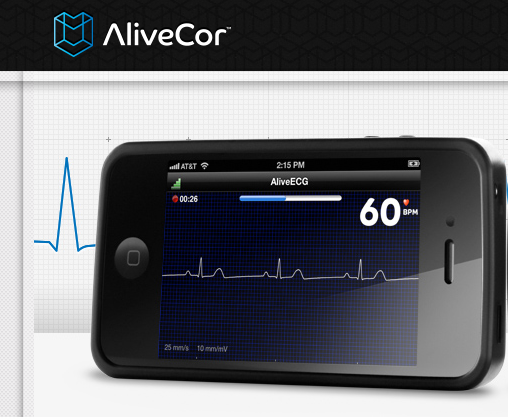
AliveCor created its mobile electrocardiogram (ECG) recorder, which is basically an iPhone case embedded with electro sensors.

It lets anyone perform a routine heart checkup by pressing a smartphone to their chest.

This means patients could share weekly, or even daily, readings with doctors.


In this 15-part series on the thrilling, disruptive potential of "mHealth," I highlight businesses using mobile technology in health care.

Leveraging the wonders of a device that's fast becoming ubiquitous – two in three people worldwide own a cell phone – a new generation of startups is building apps and add-ons that make your handheld work like high-end medical equipment.

Cheaper, sleeker, and a lot more versatile.

Tuesday, November 27, 2012

2 of 15 startups building apps for healthcare


Take your blood pressure!

Once users plug the Withings Blood-Pressure Monitor into an iPhone, iPad, or iPod touch, they can see their data displayed in graph form.

Then, you can send them to doctors, and more. 

Watch a demo video at withings.com

In this 15-part series on the thrilling, disruptive potential of "mHealth," I highlight businesses using mobile technology in health care.

Leveraging the wonders of a device that's fast becoming ubiquitous – two in three people worldwide own a cell phone – a new generation of startups is building apps and add-ons that make your handheld work like high-end medical equipment.

Cheaper, sleeker, and a lot more versatile.


Monday, November 26, 2012

1 of 15 startups building apps for healthcare

Examine your ears!

CellScope has developed a magnifying attachment turns any smartphone camera into a mini-microscope

This allows users to capture high resolution images of their outer and middle ears, and email them to doctors for assessment.   

Future versions could include software that recommends triage treatment.

Learn more at cellscope.com 

-->
In this 15-part series on the thrilling, disruptive potential of "mHealth," I highlight businesses using mobile technology in health care.

Leveraging the wonders of a device that's fast becoming ubiquitous – two in three people worldwide own a cell phone – a new generation of startups is building apps and add-ons that make your handheld work like high-end medical equipment.

Cheaper, sleeker, and a lot more versatile.

Tuesday, October 05, 2010

8 mobile medical apps

Your doctor is likely using his mobile device to access healthcare technology in mobile app form as part of your care. Access to accurate, up-to-the-minute information enables healthcare practitioners to provide better treatment at lower costs while saving time, minimizing errors and legal challenge.

Mobclix, the industry's largest mobile ad exchange, mined data that showed record growth in healthcare apps: over 1,399 are currently available, up from just 616 last June.

Some apps are built out of necessity by the doctors, while others are created by knowledgeable developers, to improve patient care and reduce the likelihood of medical errors. 

Utilizing trusted, valuable resources and tools, some of the most popular healthcare technology apps include:
  • Skyscape: Offers customizable content by specialty to medical professionals directly at point of care.  Skyscape’s MedAlert™ offers instant drug updates, journal summaries, clinical trial results and other up-to-the minute information by specialty on your cell phone, smartphone, PDA or desktop.
  • Discoverant: analyze and integrate discrete and continuous data for delivery to mobile devices and is used by many of the world’s life sciences manufacturers including Abbott Labs, Baxter, Biogen, Bristol Myers Squibb, Eli Lilly, Genzyme, Merck Serono and others for better process understanding.
  • Epocrates: One user called it an “updated PDR at your fingertips;” it also has drug interactions, lab results references, disease information and more than 900,000 healthcare professionals, including one in three U.S. physicians, use Epocrates’ innovative mobile and web-based products to help them reduce medical errors, improve patient care and increase productivity.
  • HealthMap: tracks global disease outbreaks.
  • Medscape Mobile: search 6,000 brand name or generic drugs, check for drug-drug interactions and get medical news.
  • Papers: search and download scientific papers; forward with your notations.
  • PubMed on Tap : access the NIH’s library of more than 19 million citations for biomedical research and email them to your colleagues.
  • Transpara: visual key performance indicators for manufacturing operations.
If your doctor is making decisions about your treatment based on these mobile apps, would you like to know that the information is accurate?  So, the big question: Is the FDA is going to require that it provide clearance before new apps go to market?

Currently, the FDA has no overarching regulation in place for mobile medical apps, despite the fact that they have indicated in the past that under certain circumstances the iPhone may be considered a medical device and therefore regulated as one, according to a report by Brian Dolan on Mobihealthnews.

What do you think? How might the FDA regulate wireless health under its existing system?