Saturday, December 17, 2011

1,200 artists online -- a select few on-display at the OOVAR Juried Show

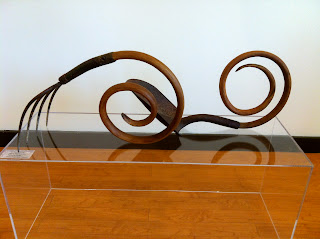
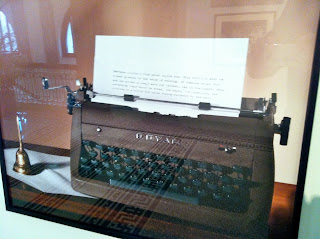
I enjoyed my Saturday afternoon at Columbus Metropolitan Main Library, viewing works from the annual Ohio Online Visual Artist Registry Juried Art Show.

The library's Carnegie Gallery featured original works by Ohio artists.

Here are a few of the pieces I admired:


Friday, December 16, 2011

12 Days of Christmas (Good News): here's a "nice" list

With the holidays upon us, and the media already having cornered the market for sharing bad news (call it the “naughty list”), I was really glad to get a “nice list” of the good news I may have missed.

(Thanks to Jennifer Wilken, my longtime trusted economic advisor, for sharing this.)


1.    The U.S. unemployment rate fell to 8.6% in November, reaching a 21⁄2-year low, while the September and October reports were revised to show more job creation than originally reported.

2.    The ADP employment survey showed the biggest gain in eight months. Small businesses (under 50 workers) added the most jobs in five years.

3.    Over the past year, 1.6 million jobs have been created.

4.    The private sector has added jobs for 21 consecutive months.

5.    An average of 150,000 private sector jobs have been created each month for the past year.

6.    The unemployment rate has dropped by 1% in the past year.

7.    Manufacturing – November’s Institute for Supply Management (ISM) manufacturing index increased to a five-month high, while the new orders component rebounded to a seven-month high.

8.    Home Sales – Sales of existing single-family homes rose 1.6% in October compared to September, versus expectations for a 2.2% decline.2 Sales were up 13.5% versus a year ago. Total housing starts also grew 16.5%, while building permits increased 17.7%.

9.    Consumer Confidence – The Conference Board’s Consumer Confidence Index jumped to 56 in November versus 40.9 in October. This exceeded even the most optimistic forecasts and marked the biggest one-month increase since April 2003.

10.  Auto Sales – U.S. vehicle sales grew 14% in November, the sixth consecutive month of growth and the highest level since August 2009.

11.  Black Friday – Retail sales rose 16% over the four-day Thanksgiving holiday weekend, topping off improving retail sales in general over the last several months.

12.  Dividend Increases – Through the end of November, 312 companies in the S&P 500 increased or initiated a dividend for 2011, up from 232 in 2010 and just 143 in 2009.


Thursday, December 15, 2011

N-of-8 case study: telling a brand story consistently

My involvement in the Berinert brand began in 2005 when CSL Behring engaged my team to help on a rare disease called Hereditary Angioedema (HAE). 

This led to the development of the award-winning AllaboutHAE.com disease awareness print and web-based educational branding.

In the last half of 2008, we moved into the next phase of Berinert brand development – global hallmarks. 

To ensure a worldwide perspective throughout the process, my team collaborated with its global network partners beginning with the RFP process, right through to launch. We tapped into diverse agency talent to generate initial thinking, drive discussion, and gain insights. 

Along the way, Stinson worked closely with the client and more than a dozen country marketing managers to refine the brief and advance the global strategy.  

All while applying our proprietary tool, Action Shoes®, to structure our creative development.

But before our visual identity group began its exploration – through extensive color and typography audits, creating a design framework – we used the N-of-8 process to create a strong foundational story. 

Our main objectives for story development were to ensure that all developed materials are on-target and persuasive to physicians and patients, to create compelling messages that connected directly with the customers, to conveys CSL Behring total brand value proposition, and to evaluate creative concepts and promotional pieces to identify areas for needed refinement in telling the story in multiple media.

That was the starting point. 

At the completion of the process, we could then engage the wide variety of design audits and design studies to uncover trends and identify opportunities for visual branding.  The logo, logotype, and colors were developed for the Berinert branding to better tell the story of speed.  In addition the N-of-8 process channeled our verbal brand team in writing a clinical monograph, a product highlights brochure, and the brand standards guidelines book. Finally, we executed market-specific brand launch campaigns including sales materials, patient literature, support programs, and journal advertising.

Together, these elements worked together to tell the Berinert story consistently in verbal, visual, and scientific terms. 

Ultimately, a global brand was forged.


Wednesday, December 14, 2011

NACA campaign to promote child abuse intervention in Native American communities


One of my most rewarding and meaningful projects of 2011 has surely been the public service campaign for Native American Children’s Alliance. 
NACA is an inter-tribal membership organization whose mission is to promote excellence in child abuse prevention and intervention in Native American and Alaska Native communities through training, mentoring and information.
We helped to develop and execute a pilot initiative among key American Indian healthcare clinics.  The goals were to:
  • Better understand the current circumstances around child abuse
  • Develop culturally appropriate key messaging
  • Develop appropriate and usable training and awareness kits for distribution
  • Create key findings that can apply to a broader tactical awareness media campaign
My creative design partner, Katie Pendlay, developed three wonderful and touching concepts.  Each leverages the NACA brand symbol of the drum.
Working through the executive director of NACA, Linda Logan, we evaluated these platforms at the Indian Health Service clinic in Chicago.  They helped us determine which tools were most needed.
The result was a disk of customizable promotional assets:  a poster, a tear-pad easel, and a brochure.
The campaign has been launched with tribes in rural New Mexico and in urban Detroit.  Linda also recently presented the campaign to an Indian Nation conference in Montana.

Tuesday, December 13, 2011

8 kinds of creative "triggers" to breakout of the ordinary

Although it's impossible to draw up an exhaustive list of every activity or setting that may produce breakout thinking, each of the triggers mentioned below has worked well me.
In their book The Breakout Principle: How to Activate the Natural Trigger That Maximizes Creativity, Athletic Performance, Productivity and Personal Well-Being, Benson and Proctor present these among many categories that have demonstrated the power to stimulate the biological changes commonly associated with breakouts and peak creative experiences.
As you review these options, ask yourself: Is it possible that this approach, or something like this approach, would work for me?
And while at first these activities may seem totally different, they all have one major factor in common: the power to sever prior mental patterns -- and that's what the Breakout trigger is all about.

Monday, December 12, 2011

HEALTH MEGA-TREND #5: Stress Reduction

For 75% of consumers across 17 countries and four regions, "maintaining or improving health" has become more important to them in the two years since Datamonitor's last report on Developments in Global Consumer Trends.

The recent
Datamonitor survey shows that more than 40 health-driven trends are influencing consumer lifestyles and product choices globally.

In analyzing MEGA-TREND #5, we see that stress is a common theme in modern lifestyles as consumers adopt stress reduction strategies in their pursuit of wellbeing. Consumers are faced with the need to confront and manage tension and anxiety

This mean that the pursuit of work-life balance represents an ongoing conflict between a desire to maximize leisure time, maximize occupation success, and maximize leisure time.

What this has led to is the “pampered relaxation”, which is ways consumers are actively seeking moments of downtime.  In addition, “mood foods” reflect consumers’ tendency to eat as a comfort or reward.

Here are implications and opportunities that emerge from these finding:

  1. position products as ‘antidotes to reality’ and which give consumers a feeling of being in control
  2. help consumers navigate the ongoing problem of work-life balance
  3. align with the pampered relaxation trend, particularly personal care
  4. develop a portfolio of food and beverages based on ingredients that make individuals happier, calmer, livelier and even more intelligent

All of these are potentially compelling propositions for those who are becoming more aware of protecting their mental/emotional well-being.


Friday, December 09, 2011

Interim data from ongoing Phase III trial of Urocidin in BCG-refractory bladder cancer

As I look back on some highlights on the year, Endo Pharmaceuticals and its partner Bioniche Life Sciences reported interim data from an ongoing Phase III trial evaluating Urocidin™ in patients with bacillus Calmett-Guerin (BCG)-refractory nonmuscle invasive bladder cancer (NMIBC) suggest the treatment may represent an alternative to cystectomy.


The new trial results in 129 patients in the U.S. and Canada showed that for patients with high-grade papillary tumors and/or carcinoma in situ who failed to respond to one or more courses of BCG, treatment using Urocidin was associated with an overall one-year disease-free survival (DFS) rate of 25%. DFS was defined as a lack of recurrence or progression to muscle-invasive disease. The one-year DFS rate was 35% for patients with only papillary tumors, and 21% for those with carcinoma in situ, with or without papillary tumors.


A second, global Phase III study evaluating Urocidin was initiated in February. This open-label, active-controlled trial will compare Urocidin with mitomycin C in the intravesical treatment of about 450 patients with BCG-recurrent or BCG-refractory NMIBC.  


Urocidin is a formulation of mycobacterial cell wall-DNA complex (MCC), which appears to have both immunostimulatory and direct anticancer activities, Bioniche claims. The treatment is administered by transurethral catheter directly into the bladder. Endo holds exclusive global rights to develop and market Urocidin for the intravesical treatment of nonmuscle invasive bladder cancer.


Thursday, December 08, 2011

7 steps for pharma in the years leading to 2020

The choices for pharma companies are two:
Change now and control your destiny
- or -
pursue business as usual and allow your fate to be controlled by others.


Executives and board members at pharmaceutical companies need to ask themselves: Which path will we take?


The global pharmaceutical industry is facing an unprecedented opportunity. Over the next decade, the market for pharmaceutical products will nearly double in size, reaching $1.3 trillion by 2020 to meet the medical needs of the aging global population and a surge in demand from emerging countries.

Yet, according to PricewaterhouseCoopers LLP in its “Pharma 2020” vision series, some pharma companies will never capture a share of this enormous market – because they continue to bank the future of their business on a model that will no longer exist.

The PwC reports says that anticipating and adapting to the changing dynamics in health care is the great challenge for the pharmaceutical industry. “It is becoming abundantly clear that maintaining the current course is no longer an option. Pharmaceutical companies are fast approaching a fork in the road, and they must choose a path: Will they focus on innovation and offer value in the form of more targeted drugs, with proven outcomes and a suite of value-added services around them? Or will they go after the commoditized mass market, driving revenue with volume?,” asks PwC.

Along the way, there will be winners and there will be losers. The winners will be those who have the courage to pick the right path and begin making changes in their business models now.

Here are seven major steps that PricewaterhouseCoopers believes that pharma companies can take in the years leading up to 2020.

  1. Look Beyond the Blockbuster Model
  2. Increase R&D Productivity
  3. Focus on Prevention, Not Just Treatment
  4. Make the Regulatory Process More Flexible
  5. Personalize the Distribution Chain
  6. Go Global
  7. Choose a Path

Read the details on each of these recommended steps in the full report at PwC Pharma-2020
If pharmaceutical companies undertake these steps, they will be better positioned to manage the seismic shifts that not only pharma, but all of the health industries will undergo by 2020. The changes will enable them to benefit from the opportunities that will emerge from globalization, new technologies and new business models.

Although these changes need to be implemented over a period of years, companies must start now.

Wednesday, December 07, 2011

4 ways the new website achieves Healthwise brand goals

As a think back on some rewarding projects that went “live” in the last year, I include the new website for Healthwise.


Michelle and I had a great time working with the Healthwise team in Boise for several months in developing their site.


  • We led strategic mapping session with the key executives – provided comprehensive report including creative brief
  • We facilitated a one day copywriting and website messaging workshop
  • We worked on site maps and wireframes for the site
  • We provided copy editing and tools to accelerate the writing process


Healthwise continues to update the site with new products and its industry knowledge.  They promote the site to direct current and new customers to more information on their products.  And the sales team uses it as to support engagement with new customers.


When I look at the site, I really think it achieves the goals that were important to them:

  1. The ability to stay fresh with the content they are providing to their clients
  2. Create a dynamic site that provides easier access to their products and services
  3. Communicate clear, simple messaging that makes it easy for customers to find the content they are looking for
  4. Provide a better sales tool for their representatives to use
To see more, visit healthwise.org

Tuesday, December 06, 2011

4 principles of N-of-8® applied to “advisory boards”


I continue to promote the principles of N-of-8® to the ubiquitous tactic of “advisory boards.”  

That means demonstrating how the tool can be use to identify the right advisors, maintain a practice focus, create an agenda, and produce actionable results.


  1. Advisor relationships are based on science, mutual collaboration, and engagement.  They tend to evolve over time.
  2. When creating N-of-8 Advisory Boards, recruit both “opinion leaders” and “practice leaders.”
  3. Instead of just asking for reaction, you should use N-of-8 to create a forum for insight and advice.
  4. When facilitating an N-of-8, move from the “should do” to gain agreement on the “let’s do.”


The N-of-8 interaction process with thought leaders is different than the immediate, transactional tactics used on the commercial side of a company.  Instead, it builds on relationships based on science, mutual collaboration, and engagement.  These tend to evolve over longer periods of time than interactions with inline brands.


Because an N-of-8 advisory board is not a sales event, it must be assessed more like you’d assess a focus group—by number of positive reactions.  Yet, it can help a brand innovation team address the challenge of creating, maintaining, and leveraging those positive reactions  -- and still safely navigate regulatory hurdles.


Thought leaders will continue to be a critical component of a bio-pharma company’s professional marketing and medical strategy.  Therefore, we must maximize their impact in diffusing innovation and disseminating scientific information. 


Life science brand executives can rely on the N-of-8 tool for this goal.


Monday, December 05, 2011

Innovation Institute helps "unleash your creative core"

On a recent business trip, I enjoyed reading about the Innovation Institute in Charlotte, NC.

The article in the US Airways magazine described how it helps executives unleash their creative abilities -- as well as those within their companies.  Participants at the Innovation Institute work with expert facilitators and professional artists explore topics such as “Unlocking the Creative Voice,” “Pushing the Edge” and “The Value of Failure.”  

Suzanne Fetscher, then the president of the McColl Center for Visual Art,
founded Innovation Institute in 2005. It was her vision that forged a connection around the topic of creativity between the corporate community of Charlotte and McColl Center for Visual Art.

Fetscher recognized that artists, who live and breathe the creative process as part of daily life, could provide a uniquely meaningful contribution to corporations and other organizations seeking to instill creativity and innovative ideas among their leaders.

You can read the entire article entitled "Cultivating Creativity" at usairwaysmag.com

Sunday, December 04, 2011

3/4 of LGBT adults prefer brands that support causes important to them

A new national survey found that 74% of LGBT adults are likely to consider brands that support nonprofits and causes important to them as an LGBT person.

A significant 41% of these adults say they are extremely likely or very likely to consider these brands. 

In addition, when it comes to workplace policies, nearly nine out of ten (87%) LGBT adults say they are likely to consider a brand that is known to provide equal workplace benefits for all of their employees, including gay and lesbian employees.

Brand loyalty appears to be more important than price in certain situations for LGBT people.  

Seven out of ten LGBT adults said they are likely to remain loyal to a brand they believe to be very friendly and supportive to the gay, lesbian, bisexual and transgender community "even when less friendly companies may offer lower prices or be more convenient." 

The nationwide online survey was conducted by Harris Interactive, a global market research and consulting firm, in conjunction with Witeck-Combs Communications, Inc., a strategic public relations and marketing communications firm with special expertise in the LGBT market.

Click here to read more at  www.prnewswire.com

Saturday, December 03, 2011

“Eclipse” wind kinetic sculpture: captures attention & awakens creativity.

One of the first impressions I got on my initial visit to GSW was the unique sculpture in front of the office.

So, I’ve been doing some research on its design – and its designer.

The name of the structure is “Eclipse,” designed by Robert Mullins and hand-built by the Wind Kinetics Institute, Inc. 

It combines aesthetic design with mechanical fundamentals. It has independent revolving elements that capture even gentle breezes. The movement reminds me of a gyroscope within a gyroscope, because it spinning motion is random yet graceful in the wind.

“Eclipse” represents the principles of kinetic art with moving parts powered by wind. encompassing a wide variety of objects that overlap.

The Wind Kinetics Institute specializes in large, outdoor kinetic wind sculptures for commercial and residential settings. Additionally, the Institute has been producing custom metal fabrications for designers, developers, contractors, universities and corporations nationally and internationally for more than 20 years.

In fact, Wind Kinetics Institute’s work has been installed in every major shopping mall in the United States. Their work can be found at the Columbus Zoo and Aquarium, the Vienna Zoo in Austria, The Ohio State University, Case Western Reserve University, and many more. The wind sculptures range in height from 12 to 40 feet.

Robert Mullins is a Columbus area resident, business owner, and artist.  He started a metal fabricating shop in 1988, specializing in custom metal sign products.  The Institute has a complete machine shop, tube rolling, and sheet folding equipment, including a planishing hammer and large industrial sized English wheel for customized work in aluminum and copper sheet goods.

To me, “Eclipse” is spellbinding – at times exhilarating or serene. When I look out an office window, or walk by it on my way into work, it captures my attention and awakens my creativity.


Friday, December 02, 2011

$6.5 billion in global R&D contracts: Battelle an example of creative energy in Columbus

As we get into December, I start looking back over the year to appreciate some personal and professional highlights.


I've enjoyed getting to know Columbus better, including the chance to experience the creative energy of new people and world-class organizations.

One such group is Battelle.

Battelle is an 82-year-old organization that has grown into the world’s largest independent R&D conglomerate, offering services through four global business units: laboratory management; national security; energy, environment and materials sciences; and health and life sciences -- one of its key targets for growth.

At this point, Battelle’s global R&D contracts are worth about $6.5 billion annually.

Carmin Gade, PhD, Battelle’s chief marketing-communication officer, was interviewed earlier this year about the future of global R&D.  Here's what Dr. Gade told Mike Kallmeyer, host of ONN-TV’s Ohio Means Business program:

"In health and life sciences, 
we’re focusing on public health; drugs, devices and diagnostics; 
(and) agriculture and food science — and analyzing: 
'What are the needs of communities worldwide? 
Where can we help advance the science to meet those needs?'  
We have clients in the international markets that are looking for 
someone to partner with and offer solutions that can meet 
their needs and deliver the impact to 
humankind that they’re looking for."

You can watch the interview at onntv.com


Thursday, December 01, 2011

Patient-reported outcomes: key to brand differentiation

In my strategy meetings with pharma clients, I really stress the need to find relevant distinction between brands.

And, of course, a benefit to the patient is the most important of all.


So I appreciate the point of view of Gregory Hess, MD, MBA, MSc, chief medical officer and vice president for health economic and outcomes research at SDI.

Hess says, "Patient-reported outcomes offer a benefit to brand managers as well: They can provide compelling evidence to differentiate their brand in cases where there is little or no difference in efficacy, safety, or price.  Having real-world evidence that indicates a brand helps patients improve their quality of life—and communicating that to physicians, managed care, and patients—can help one drug stand out over the competition. As patients are assuming more of their own healthcare costs, patient-reported outcomes are becoming more important."

The table above illustrates the comparison of a clinical trial viewpoint to the real-world situations.

You can read more -- including how Hess suggests to communicate outcome results -- in his article in our industry journal PM360 at pm360online.com