Showing posts with label brand development. Show all posts

Wednesday, December 04, 2013

Rogaine - lesson learned from innovation blunders


Here’s another great story with lessons learned from innovation blunders.


In this series of case studies, Hodock shares insight on avoiding 8 common mistakes in new product development. 

In the case of Rogaine, it was mismatched positioning.


Fifty million American men experience male-pattern baldness. In 1996, they received some very good news.  The Food and Drug Administration cleared Rogaine, a topical 2 percent minoxidil solution, as an over-the-counter hair regrowth drug for men and women with common hair loss. Hallelujah! Men suffering from hair loss often experienced “anxiety, loss of self-confidence and even depression”. Rogaine gave hair-challenged men a dual benefit—a full head of hair and the restoration of self-esteem.

Rogaine had a natural contagion, because the preliminary buzz purported it to be nothing short of a miracle. As a result, it had an avalanche of positive publicity prior to its market introduction. Wall Street was especially euphoric about Rogaine’s prospects, and its parent company, Upjohn (now Johnson & Johnson), did nothing to temper the financial cheerfulness coming from the street. In this situation, Rogaine’s positive buzz turned out to be destructive rather than helpful. Here’s why.

Balding males naively believed their departed hair follicles would return instantly by rubbing Rogaine into their scalps twice a day for a month or so. Rogaine initially attracted the most extreme cases of male-pattern baldness, primarily older males in their fifties and sixties desperately grasping for their youth. Rogaine could not deliver for these extreme cases. There was a deep ravine between positioning expectations and product delivery. 
 
Rogaine is a complex product, as explained to me by a Pfizer marketing executive. It is only effective in about 40 percent of the cases. It can take eight months to see the best results. The product is not particularly effective in cases of frontal baldness or receding hairlines. Compliance is essential to see any results. It must be used twice a day. If treatment is stopped, reversal occurs, losing any benefits from treatment. The application process—rubbing it into the scalp twice a day—is awkward.  Rogaine later attempted to make it easier with an aerosol foam version.  

Since many of the initial users represented extreme cases and a desire for instant gratification, they dripped out; their perceived expectations—“where’s my new hair??—weren’t instantly achieved. The buzz-worthy product was still talked about, but the talk turned negative from a large segment of disappointed men, dampening Rogaine’s prospects for marketplace success. 

Rogaine currently does target younger men with a more forthright approach that the product works for a certain type of male-pattern baldness, but it is not a panacea for every conceivable case of male baldness.
                   
The makers of Rogaine made two major mistakes:

  1. Rogaine made no attempt to dismantle the early perceptions that it was a miracle product. This set an unrealistic level of expectation with respect to its product performance with the brand’s early bird customers.
  2. Rogaine required an extensive educational process to help men understand its strengths and limitations; this was never acted upon.

The net result was a wide gap between positioning expectations and product performance.

The product must be able to deliver on the positioning’s benefit promise, or there will be inevitable consumer backlash.  It’s hard to get the toothpaste back in the tube. That’s why marketers must get the positioning strategy right the first time out of the staring gate. 

Second chances are very rare. 

Rogaine never lived up to its potential, because the initial positioning and target segment were wrong from day one.

Tuesday, April 30, 2013

How to get brand ideas from UNhappy customers

on Responsiveness

"Your most unhappy customers are your greatest source of learning." 
- Bill Gates

Tuesday, April 16, 2013

The drive for simplicity

on Simplicity

"Less isn't more; just enough is more."
-Milton Glaser

Thursday, March 28, 2013

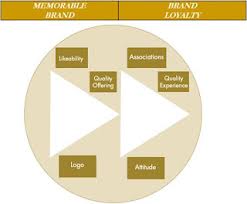
N-of-8 methods combined with ForwardFast brand model


When N-of-8 methods are combined with our ForwardFast® branding model, you can look at six main areas of the brand to determine the rebranding improvements:

1. Likeability – what elements of the product and branding are attracting customers?
2. Logo – is the name, symbol, font, design appealing – and can it be sustained in an extended life cycle?
3. Quality Offering – are the main attributes of the brand simple and easy to understand?
4. Associations – what is the brand connected with, and if it’s right, could it be strengthened?
5. Attitude – consider the tone of the package design, campaign copy, delivery system.
6. Quality Experience – this is the newest and strongest area that many marketers are learning needs attention; does the experience of buying, using, and servicing the product match your brand – and can it be elevated?

Thursday, October 04, 2012

7 viewpoints on Asia’s Brand of Leadership: topics from the SHAPE THE WORLD conference

Asia is home to the world’s fastest growing economies, yet many feel that Asian thinking does not shape its markets.

Asian leaders will share ideas in business, design and world affairs at the upcoming SHAPE THE WORLD Conference on Monday, October 22 at The Fullerton Hotel in Singapore.

“How can our organisations emerge as leaders in this changing business landscape?” asks the conference leaders, “What will it take to seize the mantle of leadership and shape the world socially, politically and economically?”

Here are 7 topics about the role of Asian brands in shaping a new Asia and how a new mindset needs to emerge to truly lead. 

1. What is Asia’s Brand of Leadership? 
Are we prepared for Asia to lead?
Mr Lawrence Chong, Chief Executive Officer at Consulus, Singapore 

2. A New Asia Requires a New Philosophy 
The unique trait of Southeast Asian organisations is our inclusiveness. Can that be relevant in the business world? Instead of rushing to adopt Western business approaches, learn about how Asian values can guide our approach in grooming business leaders.
Prof Dr M Din Syamsuddin, Chairman at Muhammadiyah, Indonesia 

3. Asian Leadership Requires Innovation 
Why is innovation necessary for Asian companies? Understand how to grow your business value chain, increase profit margins and drive overall performance.
Dr Low Lee Yong, Founder and CEO at MHC Asia Group, Singapore 

4. Panel Discussion: How Can We Create More Asian Leaders? 
Asians are known for being good managers, not good creators. To lead the market instead of waiting for the West to create demand, we need to secure talents to grow the enterprise. Hear from a panel of business leaders about how we can create an environment that will attract, nurture and retain leaders throughout the organisation.
Moderator: Mr. Idris T. Vasi, Chief Executive Officer at DST Group, Brunei Darussalam
Panelists:
Prof Dr M Din Syamsuddin, Chairman at Muhammadiyah, Indonesia
Dr Low Lee Yong, Founder and CEO at MHC Asia Group, Singapore
Mr Adrian Mok, Managing Director at Hivelocity Pte Ltd, Singapore
Mr Lawrence Chong, Chief Executive Officer at Consulus, Singapore 

5. Imagining new ways for the Asian Sport 
What is the role of branding in transforming the industry? Hear how a purpose-driven brand has built brand association through leveraging events and experience design.
Mr Adrian Mok, Managing Director at Hivelocity Pte Ltd 

6. Nurturing Leaders within Our Organisations 
Traditional HR investments end up being a large cost when employees you’ve carefully groomed leaves for a rival. Looking at it from a different angle, how can you align personal agenda and motivations with company values to grow talents within? This session will leave you with ideas and tools you will need to develop the leaders your organisation needs.
Ms Helena Pham, Senior Manager at Consulus, Vietnam 

7. Creating a Unique Culture to Drive Business Performance 
Core values are more than an aspiration and can be used to guide human behaviour within the organisation. Learn through case examples how company policies can create an intrinsic motivation for employees to work towards the goals of the organisation and increase business productivity.
Ms Tang Ying Chun, Strategy Manager at Consulus, Singapore

You can learn more at www.consulus.com/seminars

In October 2008, I was fortunate to receive a Brand Leadership Award from the Asia Brand Summit.  And as I've continued to work with clients all around the Asia Pacific region -- from India, China, Singapore, Philippines, Taiwan, Korea, and more -- I have enjoyed the many perspectives on successful brand strategies.

Thursday, March 08, 2012

Beauty brand innovation: "science at your fingertips"

“From racing cars to fabric, beauty technology comes from surprising sources,” write Claire Coleman in a recent feature in the FinancialTimes.

California-based Janice Jordan, owner of a graphics business supplying adhesive decals for racing cars, grew fed up with the damage that daily tasks inflicted on her manicure (and her nails). It occurred to her that similar technology could be used to create a solid nail coating that would both protect nails and decorate them. “It took two years of talking to engineers and looking at adhesives that, unlike existing nail glues, wouldn’t damage the nail,” she says.

The result took Jordan out of her graphics workshop and into the global beauty business (along with her co-founder Dawn Lynch Goodwin).

Frauke Neuser, a scientist for Pantene, says: “P&G has a large base in Cincinnati and frequently works with Ohio State University on projects. One of the university departments was using a technology known as Atom Force Microscopy, which allows you to observe substances at a molecular level. We wondered what would happen if we used it to examine hair in such detail.

“Ideas like this come to nothing 80 per cent of the time but, in this instance, we were able to see very real differences between different types of hair. We were also able to see what was happening at a molecular level when we applied different types of ingredients, which really made a difference to the end product.”

Read the full story by clicking to www.ft.com


Thursday, March 01, 2012

Inspiration from a past campaign success: "Open Up Fresh Possibilities"

As we get closer to spring, I'm reminded of a fresh approach we took to a marketing challenge a few years ago.

Solstice Neurosciences had acquired MYOBLOC, but the brand had not been promoted for nearly 2 years.  We needed to reconnect with customers to re-establish the channel for direct sale of this injectable biologic.

The target audience was physicians (neurologists and physiatrists) who had purchased MYOBLOC in the previous 2 year.

The campaign objectives were:
  1. Introduce Solstice as the new marketer of MYOBLOC
  2. Remind physicians of their past use of MYOBLOC
  3. Reinforce positive experience with MYOBLOC
  4. Help identify next patient opportunity to use MYOBLOC
Our creative strategy was:
  • CONNECT with unique interactive pieces, personalized messages, and “fresh” theme
  • HONEST, straight-forward reminder of product profile
  • EASY short copy and bold graphics
  • MOTIVATING to call “888” number to order
The results of the "Open Up Fresh Possibilities" campaign were impressive. Brand recall increased 29% and sales enjoyed double-digit growth quarter-over-quarter.  Even without a direct response mechanism, some 5% have requested additional materials related to the mailings. Brand preference increased from 6% to 43% among the targeted physicians in one year.

These and other elements of the "Fresh" campaign have won several industry awards -- including a feature in Rx Awards Best of Healthcare advertising book. 


Friday, February 24, 2012

3/3: United will extend BusinessFirst -- and improve business class meals

Despite what they say about airplane food, I think UNITED has continually improved its meals in business class.  

During my recent trip to Europe, I took time to read more about the brand improvements they're making: from the demitasse of fresh tomato shellfish soup with bay scallops, to the pan-seared turbot fish and grilled shrimp with lobster Newburg sauce, to the freshly brewed Emilio Caffe Italian espresso.

My flight from Berlin to Newark featured James Canora, a 12-year member of the Congress of Chefs. James is chef and co-owner at Valentino's on the Green in Bayside, NY. He also serves as corporate consulting chef for the world famous New York City Delmonico's and is co-author of Dining at Delmonico's. Through his company, NYC Culinary Events, Canora specializes in catering and menu consulting for private events. Previously at Tribeca Grill, James managed production of The Tribeca Grill Cookbook and The Shared Table, as well as special events and promotions through which he became known as "Chef to the Stars."

Starting next week, United will further extend its BusinessFirst service, offering an elevated business-class service with new amenities. These will include an additional entree option, for a total of four, designed by United’s Congress of Chefs. United is also changing the way it prepares business-class meals to improve the quality and taste. In BusinessFirst, the airline will also offer expanded wine selections chosen by Doug Frost, Sommelier and Master of Wine; and a new ice-cream sundae dessert option, with a choice of six toppings.

Additionally, in its BusinessFirst cabins United will offer improved in-flight entertainment, including noise-reduction headsets; new amenity kits featuring Philosophy-brand skin-care products; and duvet-style blankets and higher-quality pillows and hot towels.

“The re-branded cabins offer premium-cabin customers the highest levels of service, every time they fly,” says Mark Bergsrud, United’s senior vice president of marketing. “We are keeping the products that our customers tell us they value the most as we continue to build the world’s leading airline.”

United will offer premium snacks including all-natural pop chips, Emerald nuts, Clif organic energy bars, Toblerone Swiss milk chocolate and fresh fruit. It will also offer warmed nuts, presented in a small china bowl, on all lunch and dinner services; and ice-cream sundaes offered with a choice of six toppings, available on many transcontinental lunch and dinner services.

Monday, February 20, 2012

HEALTH MEGA-TREND #10: more about positive nutrition

A couple of weeks ago, I shared with you the goals of moderated consumption and healthier choices, as referenced in the mega-trends report by Datamonitor.  

It was one of the 10 most important issues shaping global consumers' buying behavior both now and in the future.


Today, I want to give you the flip-side of simply eating less – and that is “positive nutrition,” or consumers who are eating and drinking for proactively for wellbeing.


Here are the key points:


  • Eating for wellbeing: changeable dietary routines mean that consumers are willing to change their dietary habits, even when outside pressures can sometimes make this difficult.

  • Embracing diet diversity: a more balanced and varied diet is something which an increasing number of consumers pay attention to.

  • Purity and freshness: the pursuit of product choices means that consumers will not compromise on freshness, so products that cannot guarantee this face being overlooked.

  • Functional foods and personalized nutrition:  consumers are becoming less skeptical about functional foods, but manufacturers must still win confidence in the key areas of trust, price and taste to widen appeal.

  • Being hydrated: more than simply drinking adequate quantities of water, the need for instant and continuous hydration has grown in consumer importance.

Monday, February 06, 2012

HEALTH MEGA-TREND #10: disciplined consumerism

Food stress and anxiety is a growing problem among consumers.  But their aims of moderated consumption and healthier choices are confused by contradictory information and the tendency for carefree consumption.


That is today’s topic on one of the mega-trends reported by Datamonitor.  Its recent study outlines the most important issues shaping global consumers' buying behavior both now and in the future. 


Here are the goals of consumers in the area of “moderation” – along with the challenge for marketers that they indicate.


Goal:  formalized dieting, with regimented eating for weight management

Challenge:  consumers experience difficulties in pursuing sustained dietary plans


Goal:  dietary control, means exercising dietary restraint as a key demonstration of moderation

Challenge:  brand marketers must answer consumers’ needs for general healthy eating choices


Goal:  “satiety”, which is an appetite control concept with much potential

Challenge:  consumers’ understanding of satiety lags behind other areas of health and wellness


Goal: vegetarianism and meat reduction have spread among consumers, feeding the market for alternatives

Challenge:  respond to consumers’ meat reduction behavior with meat alternatives and responsible portion control marketing


Goal:  avoid skipping meals, a widespread consequence of modern consumers’ time-pressured lives and unhealthy routines

Challenge:  solving mealtime fragmentation means closing the gap between consumer attitudes towards main meal consumption and actual behavior


Goal: moderating alcohol consumption is a trend gaining some traction, although consumers trade off health for indulgence

Challenge:  create some influence over consumers’ alcoholic drink choices


Goal: abstinence and restraint in tobacco consumption

Challenge:  look at meeting the needs of moderating or ex-smokers with alternative healthy products


I’m sharing these mega-trend insights because I believe that good trend-watching is about taking the bigger-picture approach. Adopting a broader global perspective to trend-tracking facilitates better decision making by overcoming “category myopia.”

Monday, January 30, 2012

HEALTH MEGA-TREND #9: Tools that enable more informed health-driven choices

Consumers are embracing tools that enable more informed health-driven choices.

This is another major section of my continuing series of updates from Datamonitor’s report on New Developments in Global Consumer Trends.

Here are the key learnings, implications, and actions suggested by Mega-Trend #9.
 
The democratization of health information has facilitated more self reliance.  That means consumers are continuing to turn to the media to get their health information, but need to feel that they can trust what they are reading.

A kind of “formulation attentiveness” has been on the rise – knowing about and being influenced by the health details.  As this is becoming more widespread, consumers are demonstrating their increasing knowledge of health by making consumption choices based on labels.

And of course there is information overload.  Because we’re burdened by too much information, consumers are using information short-cuts to make informed, but simplified choices. Confusion is a barrier to consumption, and therefore should be eliminated to increase consumer confidence

The relevance to brand innovation is that product formulation is a battleground for industry players, so key benefits must be clearly communicated to consumers.

Consider the personalization opportunities.

Personalized nutrition and nutrigenomics are emerging themes and reflect a crossover between the health and individualism mega-trends.  Personalized nutrition is appealing to consumers but care must be taken not to take them out of their comfort zones.

Personalized beauty regimes are still relatively niche but are gaining traction as situational and personally adaptive beauty solutions are increasingly sought.  Demand for personalized beauty is growing in all regions as consumers become more ‘me’ orientated.

Wednesday, January 25, 2012

8 branding worksheets - available on this site for limited time

I'm soon going to be updating my book website, Forward-Fast.com

So, I want to remind you of the brand workshop tools you can download now for free.

Click to view the list of exercise-templates-for-branding


Monday, December 12, 2011

HEALTH MEGA-TREND #5: Stress Reduction

For 75% of consumers across 17 countries and four regions, "maintaining or improving health" has become more important to them in the two years since Datamonitor's last report on Developments in Global Consumer Trends.

The recent
Datamonitor survey shows that more than 40 health-driven trends are influencing consumer lifestyles and product choices globally.

In analyzing MEGA-TREND #5, we see that stress is a common theme in modern lifestyles as consumers adopt stress reduction strategies in their pursuit of wellbeing. Consumers are faced with the need to confront and manage tension and anxiety

This mean that the pursuit of work-life balance represents an ongoing conflict between a desire to maximize leisure time, maximize occupation success, and maximize leisure time.

What this has led to is the “pampered relaxation”, which is ways consumers are actively seeking moments of downtime.  In addition, “mood foods” reflect consumers’ tendency to eat as a comfort or reward.

Here are implications and opportunities that emerge from these finding:

  1. position products as ‘antidotes to reality’ and which give consumers a feeling of being in control
  2. help consumers navigate the ongoing problem of work-life balance
  3. align with the pampered relaxation trend, particularly personal care
  4. develop a portfolio of food and beverages based on ingredients that make individuals happier, calmer, livelier and even more intelligent

All of these are potentially compelling propositions for those who are becoming more aware of protecting their mental/emotional well-being.


Thursday, December 01, 2011

Patient-reported outcomes: key to brand differentiation

In my strategy meetings with pharma clients, I really stress the need to find relevant distinction between brands.

And, of course, a benefit to the patient is the most important of all.


So I appreciate the point of view of Gregory Hess, MD, MBA, MSc, chief medical officer and vice president for health economic and outcomes research at SDI.

Hess says, "Patient-reported outcomes offer a benefit to brand managers as well: They can provide compelling evidence to differentiate their brand in cases where there is little or no difference in efficacy, safety, or price.  Having real-world evidence that indicates a brand helps patients improve their quality of life—and communicating that to physicians, managed care, and patients—can help one drug stand out over the competition. As patients are assuming more of their own healthcare costs, patient-reported outcomes are becoming more important."

The table above illustrates the comparison of a clinical trial viewpoint to the real-world situations.

You can read more -- including how Hess suggests to communicate outcome results -- in his article in our industry journal PM360 at pm360online.com

Thursday, July 09, 2009

3 basic elements of a personal brand story (and the basis for your own N-of-8 personal brand development)

Purpose, truth and action are three basic elements of a brand story. Beyond brands, these are three fundamentals of a personal story, too.

So as our teams at Stinson Brand Innovation are working on several new N-of-8® brand story development projects these days, it’s also a good time to analyze our own stories.

Let’s take a close look at these three elements:
  1. Purpose is the thing in your life you will fight for. It is the ground you will defend at any cost. Purpose is not the same as “incentive.” Rather, it’s the engine behind it. It’s why you have energy for some things and not for others.
  2. Truth means your story should conform to known facts. Ask if your personal story is a work of fantasy, a lie you tell yourself, or reflects your biases and prejudices. Maybe you’re sidestepping parts of the story that are obviously untrue because they’re just too painful to confront.
  3. Action is to engage, to achieve extraordinary depth. It’s more about energy than just time. The difference between full engagement and multitasking is not incremental. With the one-foot-in, one-foot-out level of engagement characteristic of multi-tasking, a startling number of things, all relatively inconsequential, get achieved in a short time. Consider this quote: “A distracted artist will not produce anything of real worth. An entrepreneur with scattered thoughts will not come up with solutions superior to the competition’s.”
So all good stories must have purpose, truth and action.

Here are several questions to answer when creating an energizing story for your personal brand.

Purpose
  • What is my ultimate purpose? (Or, what is my company’s ultimate mission?)
  • What am I living/working for?
  • What is my defining principle and goal?
  • What makes me do what I do?
  • What is the one thing I would do, even if I had to walk through fire?
  • What would I work for, even if there were no pay?
  • How do I want to be remembered?
Truth
  • Is the story I’m telling true?
  • Is this truly my story, or is it what I believe it should be?
  • Is it grounded in objective reality?
  • What assumptions am I making, and are any of them faulty?
  • What am I white-washing to make myself look better?
  • Is my private voice in synch with my public voice?
Action
  • What actions will I now take to make things better?
  • Which habits do I need to eliminate?
  • Which habits should I begin to breed?
  • Am I an observer or a participator?
  • Are my actions filled with hope — the belief I will succeed and that the change I seek is realistically within my grasp?
  • Does this story inspire or influence others into action?
In fact, why not convene your own N-of-8® personal brand development group with trusted friends, family, or colleagues to help shape your story.